6 foto
1971' MINI Classic
Diese Anzeige melden!Bewerte!Lesezeichen setzen
£8,000Veröffentlicht 15 September 2026ID: nTf4nj
- H&H
- Cheshire
- +44Anzeigen
Information from the owner
Alter: 55 Jahre
Treibstoff: Benzin
Getriebe: Manuell
Außenfarbe: Blau
Verkäuferkommentare zu 1971' MINI Classic
Pavilion Gardens | Buxton, Derbyshire
Viewing: Tues 13th October from 12pm
Auction 14th October, 2026 12:00
Location: Pavilion Gardens St John's Rd, Buxton SK17 6BE
Registration No: FYA 265J
Chassis No: AA2SF253071U
MOT: Exempt
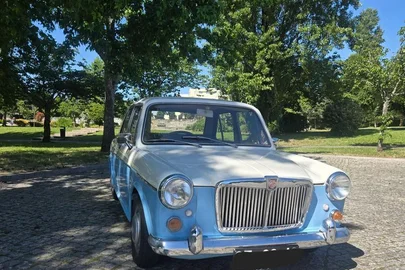
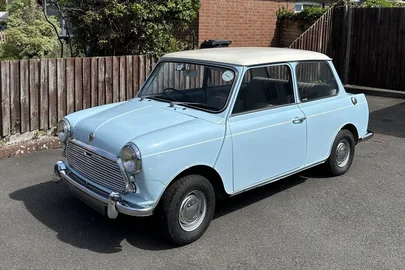
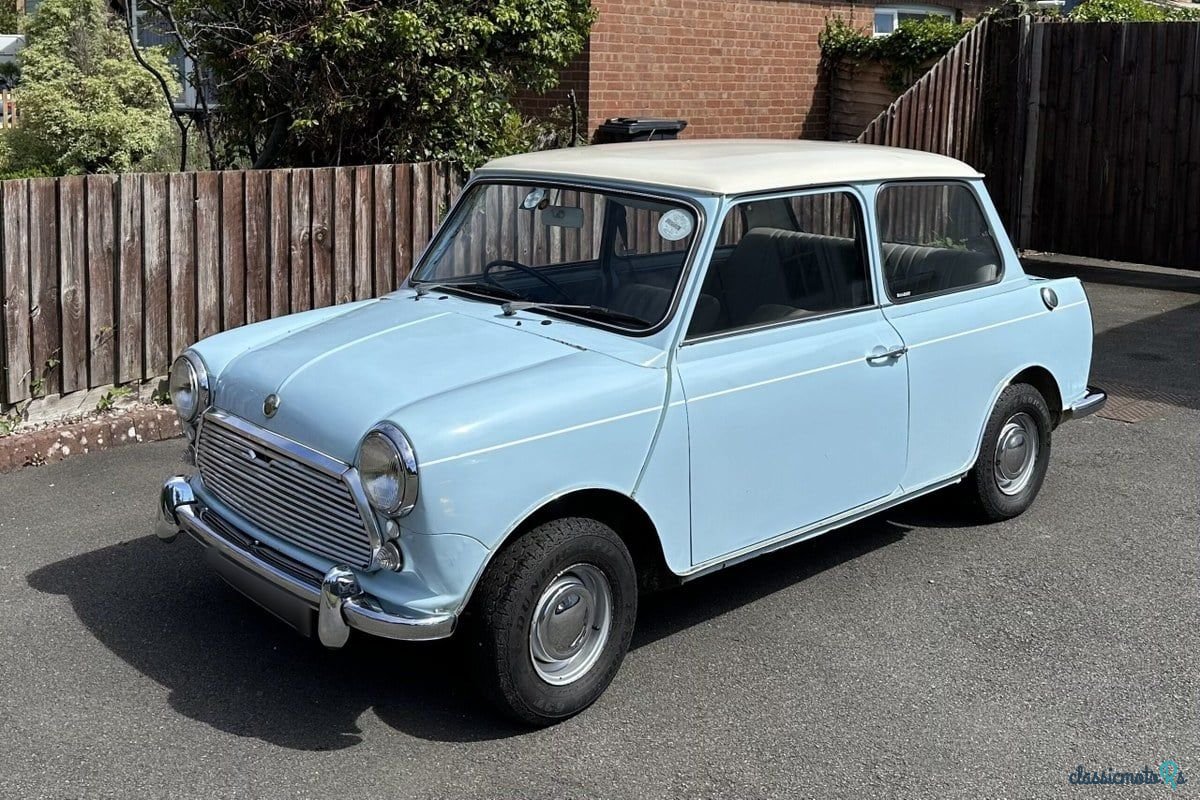
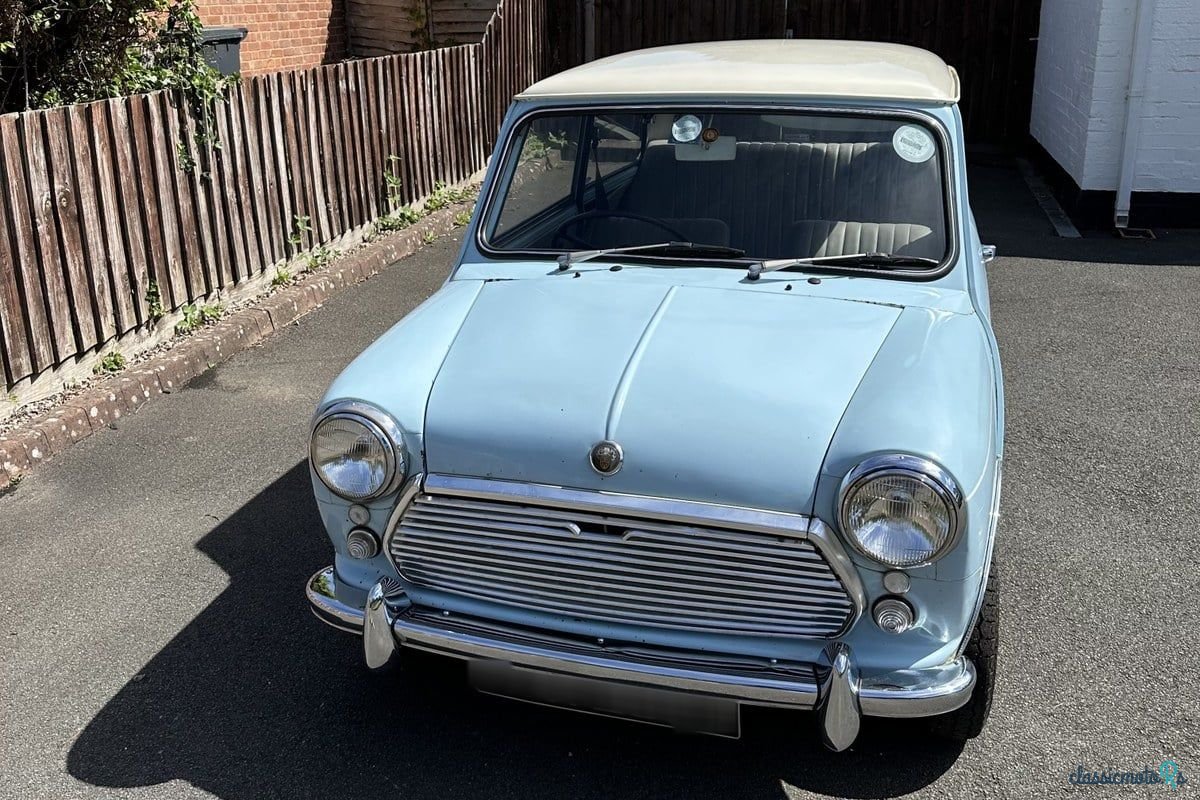
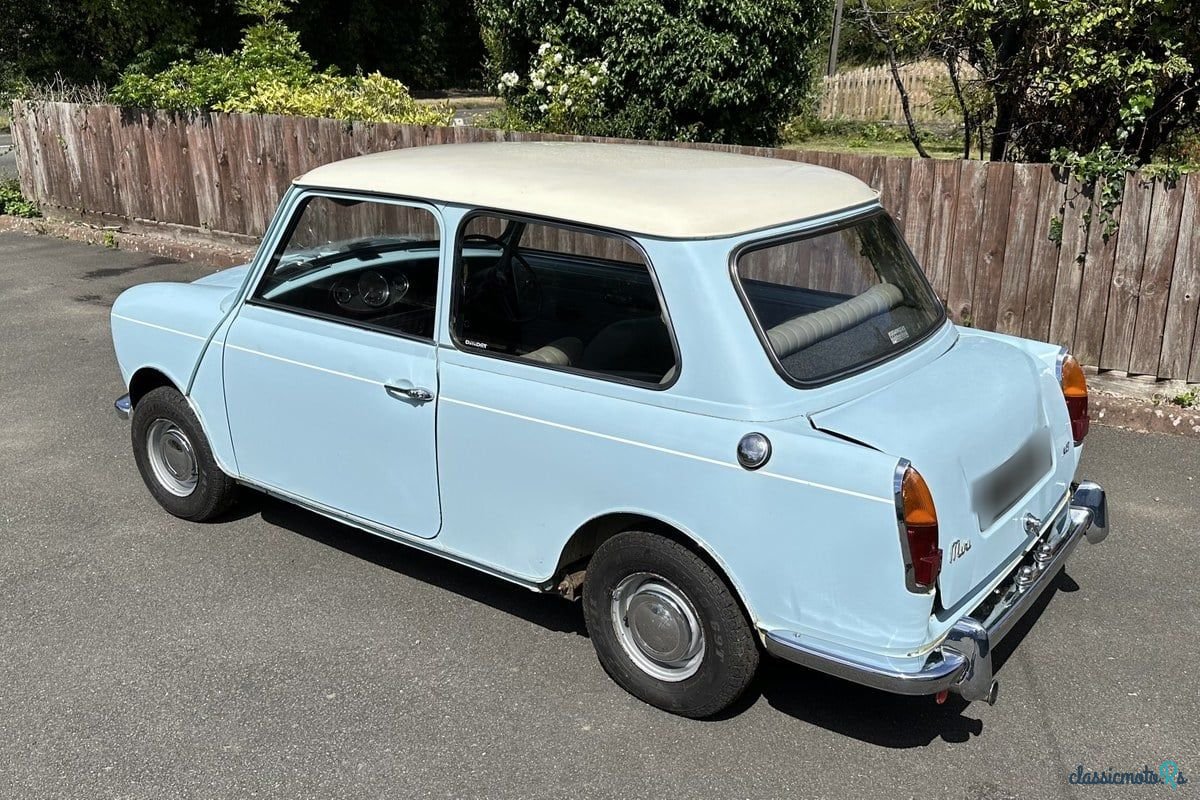
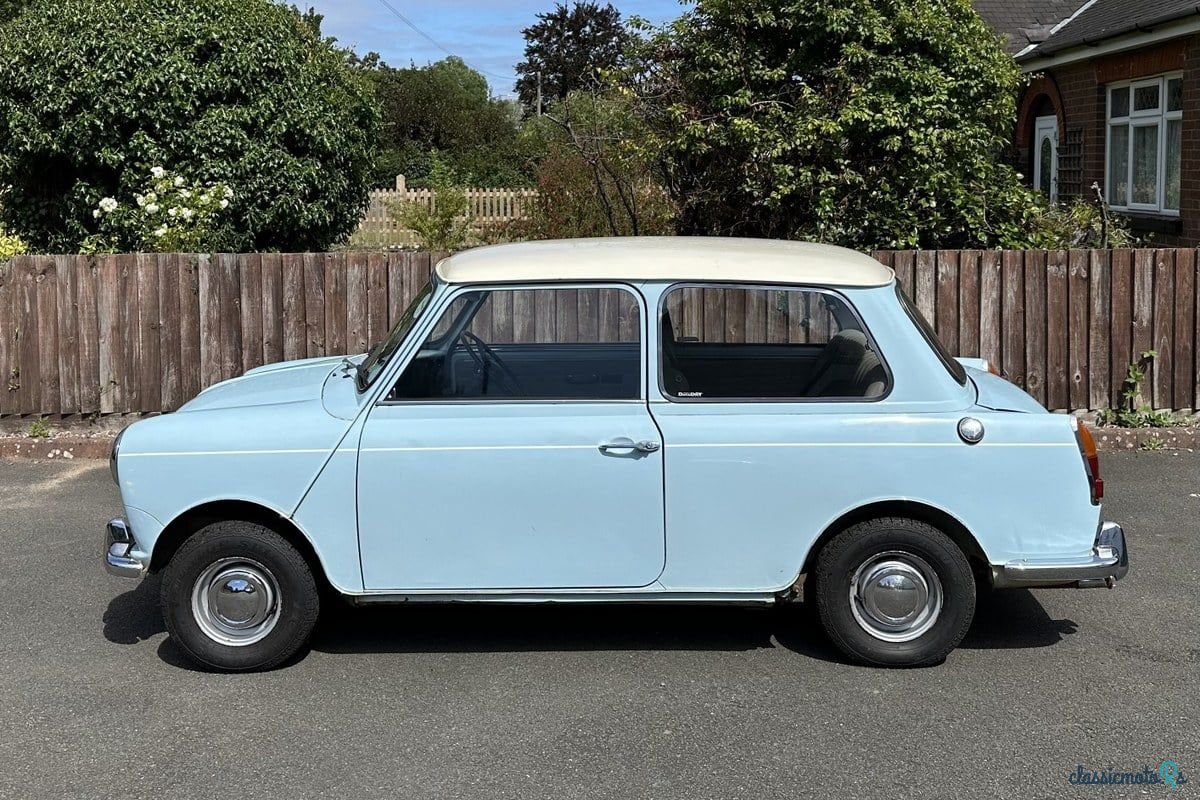
Finished in Light Blue with contrasting Old English White roof
Unique factory built Austin round-nose/ Elf-Hornet rear combination
One of only 3, 871 produced
Showing 80, 129 kilometers (49, 790 Miles)
Offered with current V5C
The South African Mini MK3 – A rare and fascinating Mini derivative.
Among the many international derivatives of Alec Issigonis’ Mini, the South African-built Mini MK3 is surely one of the most unusual and seldom encountered. Produced for only a brief period between 1969 and 1971, just 3, 871 examples are understood to have been sold, making it a particularly rare chapter in the Mini’s remarkably diverse history.
Introduced as the flagship of the newly rationalised South African Mini range, the MK3 was developed specifically for the local market. Its most distinctive feature was its extended rear bodywork, derived from that of the Riley Elf and Wolseley Hornet, which provided approximately 50% greater luggage capacity than the conventional Mini. Remarkably, this was combined with the familiar rounded nose of the standard Mini, creating a body configuration unique to the South African MK3. The model had originally been intended to carry the ‘Elf’ name, but this could not be used in South Africa as it was already associated with a locally marketed truck. Instead, Leykor – the briefly used name for Leyland South Africa’s car division – introduced the model simply as the Mini MK3.
Despite its familiar appearance, the MK3 incorporated a number of significant improvements. It featured concealed door hinges and wind-up windows, mirroring developments being introduced on the British Mini MkIII, together with larger brake linings, a pressure-relief valve designed to prevent rear-wheel lock-up and a four-speed, all-synchromesh remote-control gearbox. Power came from a locally produced 998cc A-Series engine, while dry-cone suspension was retained in part to satisfy South Africa’s stringent local-content requirements.
The MK3’s production story is particularly interesting. Tooling from the discontinued Riley Elf and Wolseley Hornet was intended to be transferred from Britain to South Africa to allow the extended rear panels to be manufactured locally. Contemporary British Leyland records, however, indicate that ‘Mini Elf’ panels were still being pressed in Britain and exported to South Africa during 1970, and it remains uncertain whether the tooling ever ultimately reached the country. Ultimately, the MK3 proved too expensive for its intended market and survived for only around two years before being replaced by the Mini Clubman saloon in 1971. With its extremely limited production, South African-market origins and unique combination of classic round-nose Mini styling with the Elf/ Hornet extended boot, the Mini MK3 represents a fascinating and highly distinctive branch of the Mini family tree and one seldom encountered outside its home market.
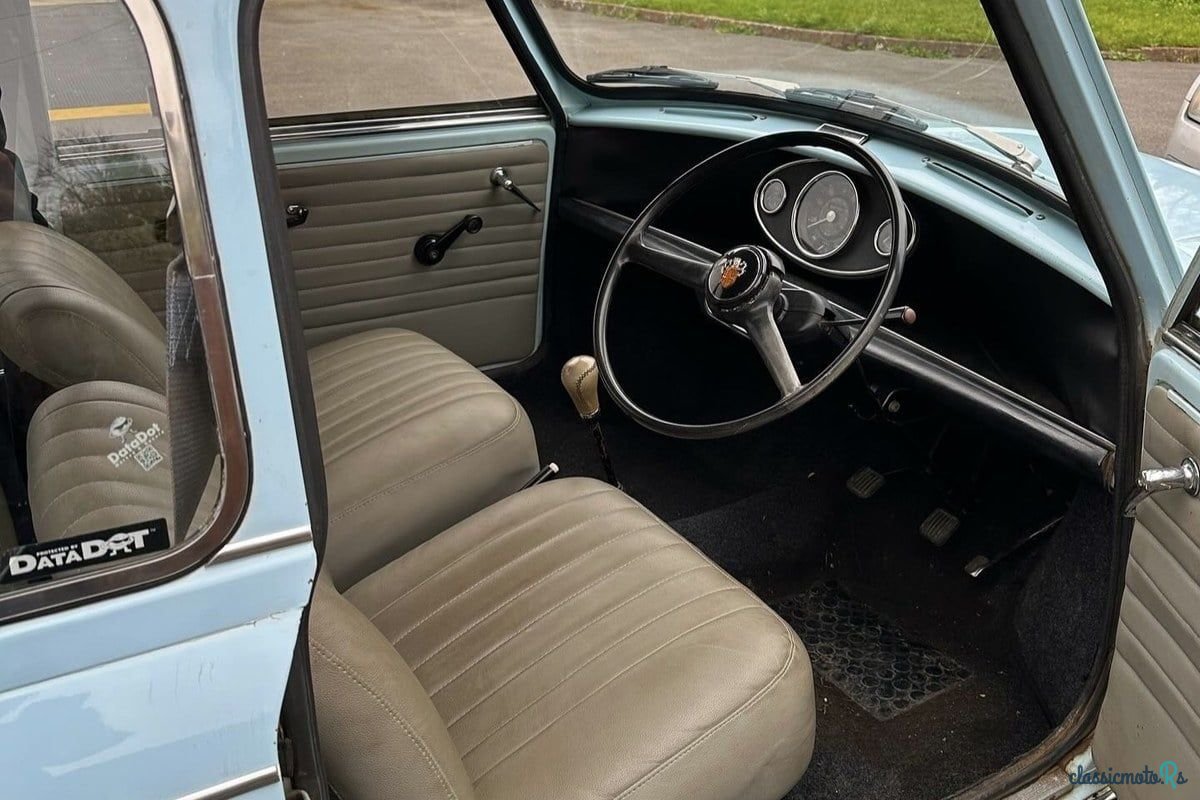
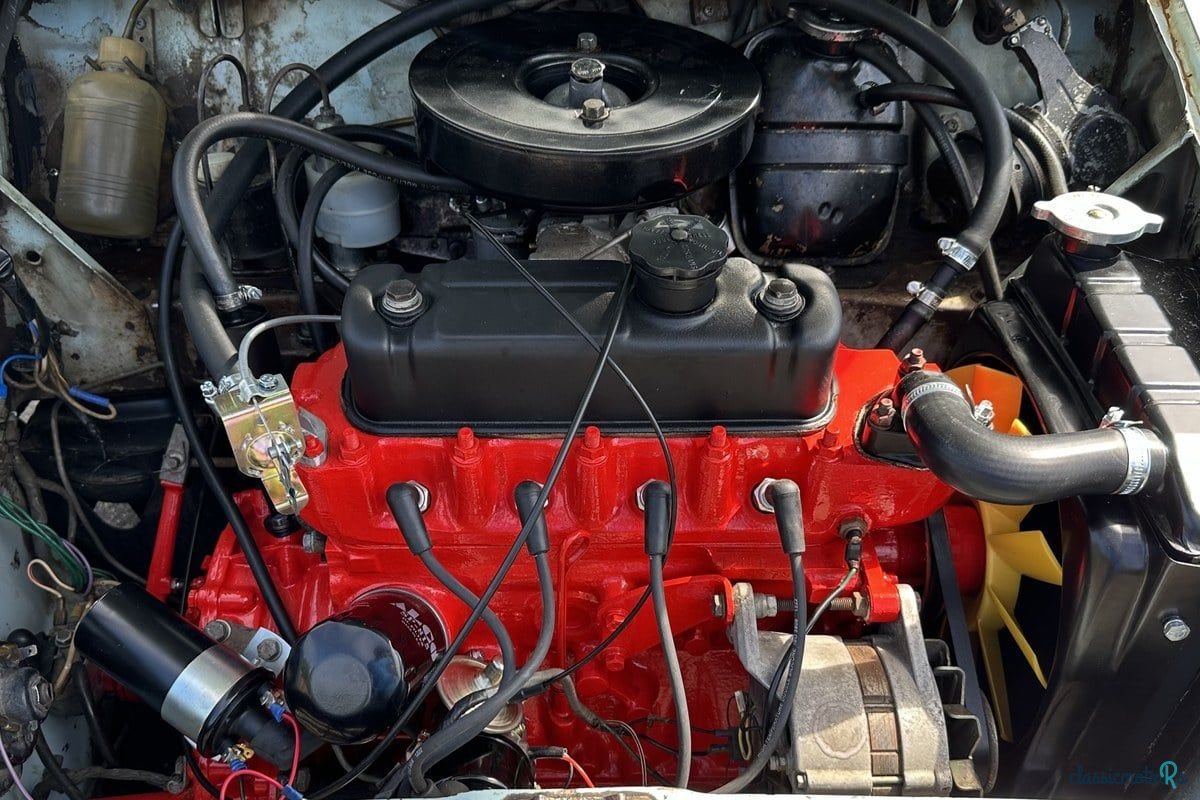
This rare Mini MK3 is attractively finished in Light Blue with a contrasting Old English White roof and Beige interior. Benefiting from a recent recommissioning, works have included a brake overhaul, new radiator, ignition coil, spark plugs, distributor cap and associated leads. Further enhanced by the fitment of an upgraded 1275cc A-Series engine, providing some welcome extra pep over the original 998cc unit, this distinctive South African-market Mini is said to be ready to drive and enjoy.
** Bidding will take place live at the venue, online via our H&H website, by telephone and commission - T&Cs apply**
Entry by catalogue and can be purchased for £20 (admits 2 people)
Viewing: Tues 13th October from 12pm
Auction 14th October, 2026 12:00
Location: Pavilion Gardens St John's Rd, Buxton SK17 6BE
Registration No: FYA 265J
Chassis No: AA2SF253071U
MOT: Exempt
Finished in Light Blue with contrasting Old English White roof
Unique factory built Austin round-nose/ Elf-Hornet rear combination
One of only 3, 871 produced
Showing 80, 129 kilometers (49, 790 Miles)
Offered with current V5C
The South African Mini MK3 – A rare and fascinating Mini derivative.
Among the many international derivatives of Alec Issigonis’ Mini, the South African-built Mini MK3 is surely one of the most unusual and seldom encountered. Produced for only a brief period between 1969 and 1971, just 3, 871 examples are understood to have been sold, making it a particularly rare chapter in the Mini’s remarkably diverse history.
Introduced as the flagship of the newly rationalised South African Mini range, the MK3 was developed specifically for the local market. Its most distinctive feature was its extended rear bodywork, derived from that of the Riley Elf and Wolseley Hornet, which provided approximately 50% greater luggage capacity than the conventional Mini. Remarkably, this was combined with the familiar rounded nose of the standard Mini, creating a body configuration unique to the South African MK3. The model had originally been intended to carry the ‘Elf’ name, but this could not be used in South Africa as it was already associated with a locally marketed truck. Instead, Leykor – the briefly used name for Leyland South Africa’s car division – introduced the model simply as the Mini MK3.
Despite its familiar appearance, the MK3 incorporated a number of significant improvements. It featured concealed door hinges and wind-up windows, mirroring developments being introduced on the British Mini MkIII, together with larger brake linings, a pressure-relief valve designed to prevent rear-wheel lock-up and a four-speed, all-synchromesh remote-control gearbox. Power came from a locally produced 998cc A-Series engine, while dry-cone suspension was retained in part to satisfy South Africa’s stringent local-content requirements.
The MK3’s production story is particularly interesting. Tooling from the discontinued Riley Elf and Wolseley Hornet was intended to be transferred from Britain to South Africa to allow the extended rear panels to be manufactured locally. Contemporary British Leyland records, however, indicate that ‘Mini Elf’ panels were still being pressed in Britain and exported to South Africa during 1970, and it remains uncertain whether the tooling ever ultimately reached the country. Ultimately, the MK3 proved too expensive for its intended market and survived for only around two years before being replaced by the Mini Clubman saloon in 1971. With its extremely limited production, South African-market origins and unique combination of classic round-nose Mini styling with the Elf/ Hornet extended boot, the Mini MK3 represents a fascinating and highly distinctive branch of the Mini family tree and one seldom encountered outside its home market.
This rare Mini MK3 is attractively finished in Light Blue with a contrasting Old English White roof and Beige interior. Benefiting from a recent recommissioning, works have included a brake overhaul, new radiator, ignition coil, spark plugs, distributor cap and associated leads. Further enhanced by the fitment of an upgraded 1275cc A-Series engine, providing some welcome extra pep over the original 998cc unit, this distinctive South African-market Mini is said to be ready to drive and enjoy.
** Bidding will take place live at the venue, online via our H&H website, by telephone and commission - T&Cs apply**
Entry by catalogue and can be purchased for £20 (admits 2 people)