Austin-Healey 3000 buying guide: history, problems and what to pay
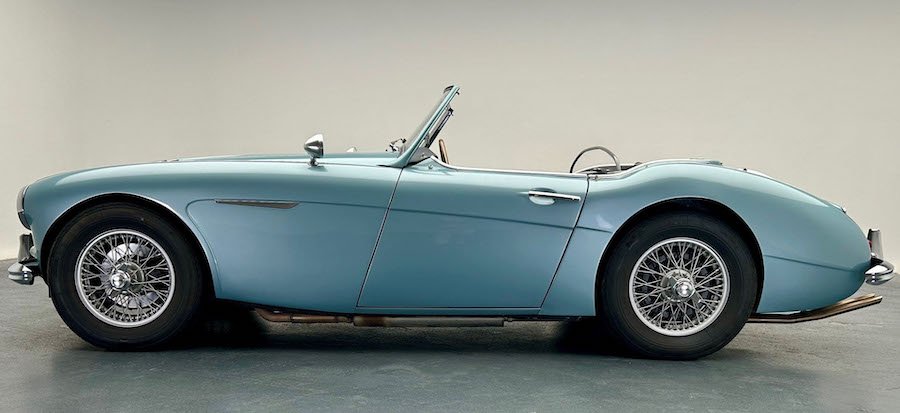
Austin-Healey 3000 at a glance
| Built | 1959-1967, Abingdon |
| Body styles | Two-seater roadster (BN7); 2+2 roadster (BT7); 2+2 convertible (BJ7, BJ8) |
| Engine | 2.9-litre overhead-valve straight-six (124bhp Mk1; 132bhp Mk2; 131bhp Mk2A; 148bhp Mk3) |
| Gearbox | Four-speed manual, optional overdrive |
| Most desirable | Mk3 BJ8 Phase 2; rare two-seater Mk2 BN7 (355 built) |
| Best value | Mk2A BJ7 or Mk1 BT7 2+2 |
| Key checks | Chassis rails, sills and outriggers; oil pressure; quality of previous restoration |
| Values (2026) | £23,000-46,000 for most cars; concours examples £66,000-83,000 |
History of the Austin-Healey 3000
Powerful engine, crisp handling and looks that could charm even the most ardent classic car sceptic: the Austin-Healey 3000 was a fitting way to round off the Big Healey era. Built from 1959 to 1967, it combined handsome styling with six-cylinder performance, becoming progressively more civilised without losing the character that made the earlier cars so appealing.
The 3000 can trace its roots back to the original 2.6-litre four-cylinder Healey 100, which entered production in 1953 and was named after its ability to reach 100mph. Following the six-cylinder 100-6, the 3000 arrived six years later with a name that referred instead to its engine’s near-3.0-litre capacity.
Its 2.9-litre overhead-valve straight-six initially produced 124bhp. Front disc brakes were another useful improvement, while buyers could choose between the two-seater BN7 roadster and the BT7 2+2. The two-seaters had a more sporting appearance and formed the basis of the factory competition cars, a connection that continues to make works rally replicas popular.
The Mk2 arrived in 1961, distinguished by the vertical slats in its grille. Triple SU HS4 carburettors and a revised camshaft brought another 8bhp, and a centre-change gearbox was introduced during production, replacing the earlier side-selector arrangement. The two-seater Mk2 is particularly rare, with just 355 built.
The following year’s Mk2A made the Healey a more practical proposition, introducing wind-up windows and a more user-friendly folding hood. A return to twin carburettors cost just 1bhp while improving fuel economy, and the changes gave the car a more accommodating character without materially diminishing its performance.
In 1964, the Mk3 brought the biggest step forward in refinement. Larger twin carburettors and another camshaft revision increased output to 148bhp, while the cabin gained a walnut-veneered dashboard and a fold-down rear seat. Servo-assisted brakes became standard.
Early Mk3s retained the Mk2A chassis arrangement, but the Phase 2 version introduced in May 1964 brought revised rear suspension and reshaped chassis rails to improve ground clearance. Production continued until 1967, making the Mk3 the final and most numerous incarnation of the 3000.
Which Austin-Healey 3000 should you buy?
The later cars are noticeably more refined, but the rarer two-seaters have an appeal of their own, particularly with the centre-change gearbox. It is worth comparing sound examples of different versions before settling on a preference.
Many 3000s have been modified over the decades. Originality can command a premium, yet sympathetic upgrades can make a car more enjoyable in regular use. With mechanical parts readily available and plenty of scope for improvement, a well-sorted example remains an appealing classic. The crucial distinction is between a properly restored car and one whose shiny paint conceals expensive structural problems, which makes choosing the right example as much about underlying condition as specification.
If the Healey is on a shortlist with other British sports cars of the period, our MGA buying guide and Jaguar E-type buying guide cover the obvious alternatives at either end of the price scale.
Austin-Healey 3000 common problems
Chassis and bodywork
- Structural corrosion is the principal concern. The chassis main rails can rust from the inside out, which makes a specialist inspection valuable even when the visible bodywork appears sound and the paint finish is convincing.
- Examine the inner and outer sills, front and rear outriggers and their crossmembers carefully. Extensive corrosion here makes for expensive repairs that can outweigh any saving on a cheaper car.
- Further checks should cover the boot floor, footwells, A- and B-pillars and the boot boxes where the rear leaf springs attach. A look at the outer panels alone will not be sufficient.
- Wings, doors and sills may conceal rust beneath filler. The front and rear crossmembers also serve as jacking points, so dents and damage are common and should be assessed along with their structural condition.
- Electrolytic corrosion can occur where aluminium meets steel, including around the bonnet and bootlid and where the wings join the body. Look closely at these areas, particularly on a car with an older restoration.
- Uneven panel gaps, overspray and poor welding point to shortcomings in previous repairs. Check that the body’s swage lines align properly, especially on an expensive restored example, where a high standard of workmanship should be expected.
Engine
- The 2.9-litre straight-six is fundamentally robust, and many engines have already been rebuilt. Blue exhaust smoke, lacklustre performance or unusual mechanical noises suggest wear, although parts are readily available for an overhaul.
- Low oil pressure warrants investigation. As a guide, the gauge should show 50-60psi with the engine cold and 40-50psi once warm, with both readings taken at 2000rpm rather than at idle.
- Original cast-iron cylinder heads can crack. Modern aluminium replacements are a common upgrade, reducing weight and improving heat dissipation, with potential performance benefits. Any conversion should have been carried out by a reputable specialist.
- Check the engine’s rebuild history for evidence of hardened valve seats suitable for unleaded petrol. The paperwork should also establish what other work was done, particularly where the engine has been modified for more performance.
Gearbox and overdrive
- Every 3000 has a four-speed manual gearbox without synchromesh on first gear. The centre-change arrangement appeared during Mk2 production, so a side-selector layout on an earlier car is not in itself evidence of an incorrect gearbox.
- Where fitted, overdrive should engage in both third and fourth gears. A fault may be as simple as a failed solenoid, but a complete rebuild is also possible, so don’t assume a cheap fix.
Brakes
- Cars left standing can suffer from seized front brake calipers and corroded discs. The system is relatively straightforward, but evidence of infrequent use makes a thorough inspection worthwhile.
- Rear drum-brake cylinders can weep, allowing fluid to contaminate the shoes and eventually compromise braking. Check them even if the car appears well maintained and presents attractively.
- Mk3 brake servos can give trouble. Check that the assistance works correctly on the road test and that any previous repairs are documented.
Suspension, wheels and tyres
- Worn front kingpins are common and reveal themselves through excessive wheel movement. Correct rebushing, shimming and preload adjustment matter, as too much play can leave the car suffering badly from bump steer.
- Old suspension bushes may have perished. Polyurethane replacements are more durable and come in different hardness ratings, but the specification matters: a very firm bush can reduce compliance rather than simply improve the car.
- Stiffer springs and bushes can make a modified car considerably less forgiving over bumps. For general road use, a set-up close to the factory specification is often the most agreeable compromise.
- Inspect wire wheels for damage and worn splines. Modern radial tyres are preferable to the original crossplies.
Interior
- The cabin is relatively simple, and a good retrim can transform its presentation. Mk3 interiors are more elaborate, however, and some fittings, including the wood veneer, can be difficult to source.
Austin-Healey 3000 values: what to pay
Healey values have eased from their peak, and there is now a wide gap between what cars make at auction and what restored examples are advertised for. At UK auctions the Mk3 has recently been selling for £22,000-46,000: a 1964 car made £46,250 with The Market in August 2026, a 1966 example £31,500 at Mathewsons in July and a 1967 car £30,000 with The Market the same month. The median for the model across more than 140 auction sales since 2020 is around £37,000.
Those results sit squarely within the Hagerty UK Price Guide’s bands, which put a Mk3 at £33,400 in good condition and £46,000 in excellent condition, with the earlier cars slightly behind. Dealer and specialist asking prices are higher: good BJ8s are currently advertised in the UK at £40,000-60,000, and freshly restored or low-mileage examples at £65,000-70,000, closer to Hagerty’s concours figures than its excellent ones. Rare two-seater BN7s and cars with genuine competition history command a premium.
| Version | Fair | Good | Excellent | Concours |
|---|---|---|---|---|
| Mk1 (1959-1961) | £22,900 | £30,000 | £44,400 | £66,500 |
| Mk2 and Mk2A (1961-1963) | £23,000 | £31,600 | £45,400 | £75,900 |
| Mk3 (1964-1967) | £25,900 | £33,400 | £46,000 | £83,100 |
Values from the Hagerty UK Price Guide, October 2026. Two-seater Mk2 BN7s, works-specification cars and the best specialist restorations can exceed these figures.
Verwandte Nachrichten
