Rare Hemi-Powered 1957 Dual-Ghia Was Designed in Italy, It's Worth a Fortune
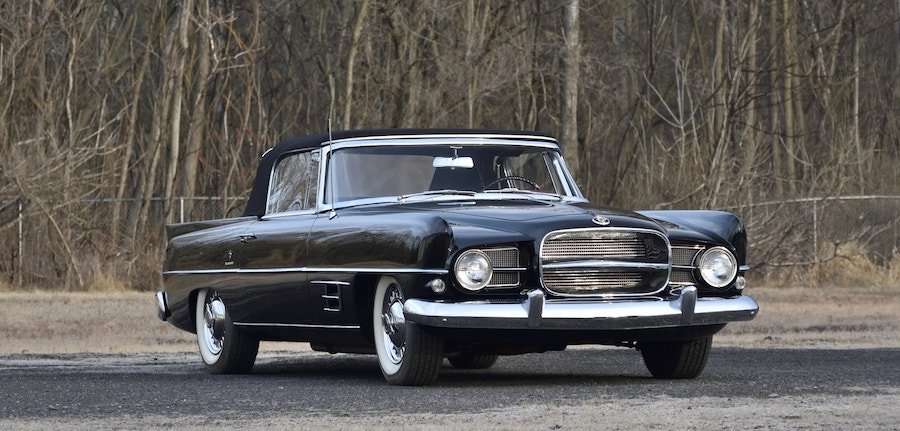
The resulting Dual-Ghia collaboration used frames sourced from Dodge, but these had to be modified. The first step was completed by Paul Farago, the Ghia representative in the US. The frames were then sent to Turin, Italy, where Ghia added the hand-built bodies and interiors.
The partially completed cars were then sent back to Detroit to have their powertrains installed. This job was handled by Dual-Motors, which would also paint each body. The painting process was quite complex, as it included no fewer than fifteen hard-rubbed clear coats. I'm pretty sure not even Rolls-Royce did that back in the day.
The drivetrains were also sourced from Chrysler. Most Dual-Ghia convertibles were fitted with Dodge's 315-cubic-inch (5.2-liter) Red Ram V8, but some got the beefed-up D-500 version of the Hemi-head mill.
Depending on the setup, the Dual-Ghia would hit the streets with either 230 or 260 horsepower on tap. The Hemi version needed only 8.5 seconds to hit 60 mph (97 kph), on its way to a top speed of 120 mph (193 kph).
However, some examples were equipped with the bigger 361-cubic-inch (5.9-liter) Super Red Ram engine, which was part of the Wedge family. This mill was rated at 320 horsepower and turned the Dual-Ghia into one of the most potent convertibles of its era.
But the Dual-Ghia was also expensive. And because Dodge discontinued the frame, production lasted only through 1958. Records show that only 117 units were built, including a pair of coupe prototypes.
The Dual-Ghia was favored by celebrities of the era, with the customer list including Frank Sinatra, Desi Arnaz, Peter Lawford, Sterling Hayden, Debbie Reynolds, Sammy Davis Jr., and Lucille Ball. Future US Presidents Richard Nixon and Ronald Reagan also ordered Dual-Ghias drop-tops.
Today, only about 32 examples have survived. They rarely pop up for sale, and when they do, they fetch over $200,000. This black-over-red example, serial number 143, is scheduled to go under the hammer at Mecum's Monterey 2026 auction in August.
The listing includes fewer details than I usually want for classic cars this rare and important, but it sure looks like this Dual-Ghia is a restored vehicle. And I'm also tempted to believe that it still relies on the original drivetrain, which pairs a 315 D-500 V8 with a two-speed PowerFlite automatic.
How much is this Dual-Ghia worth? Well, these drop-tops tend to fetch over $150,000, and some have even exceeded the $400,000 mark (the record is a whopping $484,000). What I do know is that this specific convertible failed to sell despite a $270,000 bid at Indy 2026 in May. If it changes hands at Monterey, it should do so for over a quarter-million bucks.


Noticias relacionadas
