Ghosts of the Empire: Britain’s Forgotten Supercar Experiments
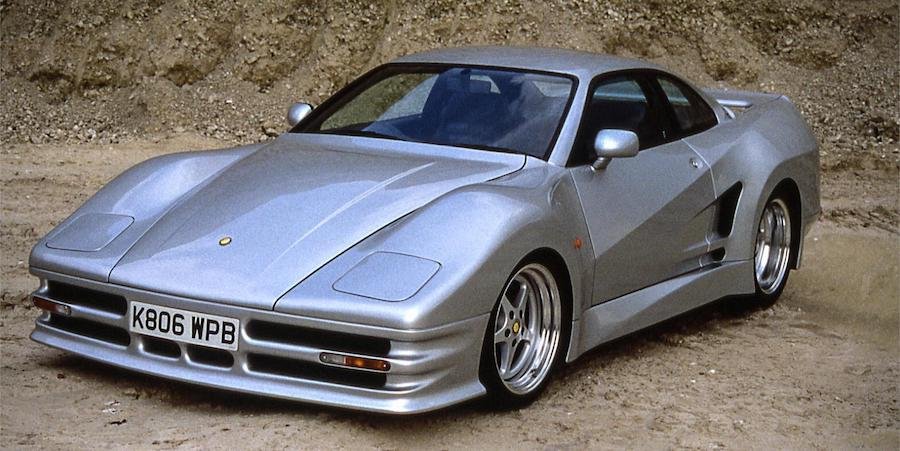
Italy gave us passion. Germany gave us precision. Britain? Britain gave us various four-wheeled thingamagigs wrapped in composite panels, powered by engines that probably came from a family sedan, and developed in facilities that looked suspiciously like converted barns. And somehow - somehow - they still made magic.
But for every McLaren and every Aston Martin that actually sold more than a dozen units, there's an entire crypt of machines that time politely pretended never happened. Cars built by companies with names that sound like they were invented during a pub quiz. Cars launched with hand-drawn brochures and engineering budgets smaller than the average espresso machine. Cars that promised the moon, the stars, and Le Mans victory, yet couldn't quite nail such trivial details as "production,” "durability," or "having enough cash to make a second prototype."
This is the Britain we love: the island that looks at Ferrari's decades of racing pedigree and says, "Right, well, we've got a V8 from a Rover and a wind tunnel made out of plywood, so let's see who wins." The nation whose automotive philosophy has always been a blend of unfiltered ambition and thinly veiled chaos.
And yet, despite their flaws - especially because of their flaws- these forgotten British supercars represent something truly precious. They are the purest form of automotive dreaming. No brand management. No stakeholder meetings. No PowerPoint decks discussing "customer journey." Just a group of unreasonably confident engineers and designers who believed, deep in their hearts, that the world needed another 200-mph missile built in a shed behind an airfield. Of course, the world usually disagreed.
That's why so many of these cars faded away - not because they were bad (although some were precariously close to redefining the term), but because they were too strange, too uncompromising, too ahead of their time, or just too catastrophically mismanaged to survive in a world increasingly run by accountants.
Today, we sift through those ruins not with pity, but with admiration. Because buried in the scrapyard sediment of British automotive history are vehicles that deserve a second look: cars that tried harder, risked more, and aimed higher than anyone had the right to expect. They may not have sold in big numbers - some barely sold at all - but every one of them has a story worth retelling. Stories of innovation, arrogance, triumph, and usually some form of bankruptcy.
So welcome to the other side of Britain's supercar legacy. Not the polished McLarens and Aston Martins that populate YouTube thumbnails and Monterey auction catalogs, but the wild, half-forgotten creatures that lurked on the edges of the industry. The ones you vaguely remember from a Top Gear VHS. The ones that only existed in concept form… but with specs too insane to ignore. The ones that promised to be the next big thing, until the money ran out on a Thursday.
These are the forgotten British supercars: heroic failures, surprising successes, and everything in between. They might not have changed the world - but they absolutely tried. Let's bring them back into the light.
Lister Storm - The 2+2 Powered by a Giant Le Mans V12

If you want to understand the true essence of forgotten British supercars, look no further than the Lister Storm - a car so improbable, so implausible, and so aggressively British that it practically qualifies as a national monument. This was the vehicle equivalent of a bar bet: "I bet you can't stuff the largest production V12 in the world into a carbon fiber wedge and make it go racing." And instead of laughing, Lister simply stood up, cracked its knuckles, and said, "Hold my tea."
Born in 1993, the Storm arrived during the awkward post–Group C, pre–GT1 transition period, when designers and engineers were simultaneously bored, restless, and slightly nostalgic for the unregulated days when race cars only needed two things: an engine and no adult supervision. Into this void stepped Lister - a company known primarily for modifying Jaguars, building a few charismatic race cars, and existing in a perpetual state of being both legendary and financially allergic.
Yet someone at Lister decided that what the world desperately needed was a front-engined, four-seat, 200-mph supercar powered by the same 7.0-liter Jaguar V12 that once propelled Le Mans prototypes. A V12 so physically enormous that it looks like it was designed by someone who had only ever heard engines described verbally. This powerplant didn't merely sit inside the chassis; it dominated the interior geography of the Storm like a geological feature.
The result? A car that could hit 60 mph in around four seconds, travel faster than most contemporary Ferraris, and also technically carry two children in the back - children who presumably did something very bad, given how close their skulls would be to the rear window.
But the Storm wasn't built for school runs. It was built for war - specifically, GT racing in an era of escalating madness. Here, the Storm truly earned its stripes. It howled, clawed, and elbowed its way into the upper ranks of GT competition, winning the FIA GT Championship in 2000 against rivals with far deeper pockets and far fewer emotional issues. Watching a Lister Storm race was like watching a cathedral sprint: improbable, yet somehow glorious.
And yet, for all its accomplishments, the Storm never entered the mainstream supercar canon. Why? Because mainstream supercar buyers prefer silly things like "brand recognition" and "having a gearbox that doesn't cost as much as a condominium." The Storm was a +200,000 GBP missile produced in single-digit numbers by a company whose marketing department was a fax machine and some very optimistic press releases.
Its styling didn't help. The Storm wasn't classically beautiful, nor was it intentionally aggressive. It looked like a 1990s video game designer's attempt at a generic "fast car" icon: wide hips, blunt nose, vast greenhouse, and proportions that suggested someone had input the wrong numbers into the CAD software and then decided, "Eh, print it anyway."
But this is precisely why the Lister Storm deserves more love. It was ambitious without being arrogant, fast without being fragile, and ridiculous without being stupid. It represented the part of Britain's automotive spirit that refuses to ask permission before attempting something astonishing.
Today, the Storm exists mostly as a trivia question, a YouTube niche obsession, and a "wait, they built how many of these?" footnote in supercar history. But its legacy is bigger than its production numbers. It's a testament to what can happen when a small, stubborn company decides that rules are merely suggestions and that practicality is for the uninteresting.
If the Lister Storm were built today, it would be celebrated as a defiant masterpiece - an antidote to algorithm-approved design and committee-polished engineering. Instead, it stands frozen in amber: a loud, large-hearted unicorn from a time when British supercar makers weren't afraid to dream dangerously.
Ascari A10 - The Final and Fastest Chapter in a Brave Carmaker's Story

If you've ever wondered what happens when a wealthy adrenaline enthusiast decides to build his own supercar brand in the British countryside, the Ascari A10 is your answer. And it's an answer nobody asked for - but once you hear it, you can't believe more people don't talk about it. Because the A10 wasn't just fast. It wasn't just rare. It was a British supercar operating at such an absurd level of commitment that it made contemporary Ferraris look like boutique handbags.
Ascari, founded by Dutch millionaire Klaas Zwart, has the distinction of being that incredibly British type of company that produced incredible machines, won serious races, built its own private racetrack, and still somehow vanished into the mist. It's the automotive equivalent of a magician making himself disappear by accident.
The A10 arrived in 2006 as the brand's final, unfiltered statement - a road-legal track car with the soul of an endurance racer and the social subtlety of a fire alarm. It was meant to celebrate Ascari's tenth anniversary. However, "celebrate" in this case meant "fold a BMW V8 into a carbon shell, crank it to 625 horsepower, and tell customers to please sign this liability waiver."
What made the A10 special wasn't just its power - though 625 horses in a 1,200-kilo body is nothing to sneeze at. It was the intensity of the thing. The A10 wasn't engineered for comfort. Or practicality. Or even sanity. It was engineered for lap times, and everything else was treated as a polite afterthought. The cabin was stripped. The suspension was brutal. The steering felt like it was wired directly into your amygdala. It didn't accelerate so much as detonate forward.
Contemporary testers didn’t know what to do with it. It was too raw to compare with a Porsche Carrera GT, too road-going to be a pure race car, and too obscure to fit into any convenient narrative. But numbers don't lie: the A10 could lap the Top Gear Test Track faster than just about anything with a number plate. The Stig himself looked mildly traumatized, which is the highest compliment a car can receive.
Visually, the A10 struck that uniquely British balance between function and "What do you mean, styling department?" It looked like a video game prototype that escaped from the rendering farm. Wide mouth, turbine-like headlights, functional vents everywhere, and a stance that suggested the entire car was flexing. Compared to its more polished Italian peers, the A10 felt like a race car wearing just enough clothing to get past the bouncer.
But here's the tragedy: nobody bought them. Or rather - almost nobody. Ascari planned to make 50. They allegedly built around 10. And then, like so many British supercar brands, the dream evaporated. No massive marketing campaign. No glitzy showroom. No influencer test drives. The A10 simply existed, blew a hole in the supercar space-time continuum, and then quietly exited stage left.
In hindsight, the A10 was the final chapter in a very British myth: a small outfit punching far above its weight, creating something genuinely world-class, and being punished for having the audacity to try. It deserved a place among the greats. Instead, it earned a cult following of insomniac forum dwellers and Nurburgring conspiracy theorists.
But if you want a forgotten British supercar that truly mattered - one that pushed boundaries, terrified drivers, and delivered unfiltered mechanical brilliance - you won't find a better candidate than the Ascari A10. In a world where supercars increasingly prioritize comfort, brand equity, and "daily usability," the A10 remains a reminder of what happens when a company decides to chase speed and nothing else.
Bristol Fighter T - An American V10 in a British Bugatti Fighter (Pun Intended)

Some forgotten British supercars disappeared because they were underfunded. Others because they were misunderstood. And then there's the Bristol Fighter T - a car so obscure, so secretive, and so utterly bonkers that even many hardcore enthusiasts aren’t convinced it actually existed outside a grainy photo set and a fevered press release. But it did. Oh, it very much did.
The Bristol Fighter T remains one of the most fascinating "what on Earth were they thinking?” chapters in British automotive history. This is what happens when a tiny, aristocratic carmaker - known mainly for hand-building gentleman’s expresses for quiet millionaires - suddenly decides to build a supercar capable of shaming Lamborghinis. And not just any supercar, but one with an engine pulled straight out of an American muscle car and tuned until it sounded like the universe tearing.
Let’s start with the basics: this was a Bristol. A brand that refused to advertise, refused to give journalists press cars, refused to confirm production numbers, and often refused to acknowledge its own existence. So naturally, in 2004, they unveiled a gullwing-doored, carbon-bodied missile powered by an 8.0-liter V10 from a Dodge Viper. Because why not?
The standard Fighter already made a ridiculous amount of power, but the Fighter T - the one we're here for - was the truly unraveled version. Bristol claimed 1,012 horsepower. They also claimed a top speed of 270 mph (434 kph), but added that the car would be electronically limited to a more "sensible" 225 mph (362 kph). This was the most British sentence ever written: We have built a thousand-horsepower gentleman's coupe, but don't worry, we've limited it for decency.
The numbers were laughably ambitious, bordering on fictional. But that was part of the charm. Bristol didn't have a wind tunnel. Bristol didn’t have a global R&D network. Bristol didn’t even have a proper website at the time. Yet here they were, confidently declaring war on Bugatti before the Veyron had even finished clearing its throat.
Visually, the Fighter T was equally unhinged. It had gullwing doors that looked ripped from a concept car, a roofline so low you practically exited horizontally, and a posture that suggested an aircraft fuselage that found four wheels and decided to live as a car. It combined aerospace influence with British peculiarity - meaning it looked fast, purposeful, and just a bit annoyed.
Inside, it was peak Bristol: part fighter jet, part mahogany-paneled study. Gauges everywhere. Switches that felt like they came from a Cold War submarine. Leather so thick it seemed hostile to the concept of weight reduction. Because even if you’re aiming for 270 mph, you're still expected to conduct yourself with old-money dignity.
But the most fascinating thing about the Fighter T isn't the specs. It’s that nobody really knows how many were built. Maybe a handful. Maybe one. Bristol would never say, and record-keeping was not their strong suit. For all we know, the Fighter T might still be prowling some private collection, scaring chauffeurs and confusing insurance people.
In the end, the Fighter T became the perfect British supercar ghost story: immense power, tiny production, massive promises, and a brand so secretive that even its triumphs felt like rumors whispered behind closed garage doors.
It didn’t redefine the segment. It didn’t humble Bugatti. It didn't spark a revolution. But it did something arguably more impressive: it made a thousand-horsepower V10 grand tourer feel… classy. Forgotten Absolutely. But like all great British oddities, it deserves resurrection - not because it changed the world, but because it proved that sometimes the most memorable supercars aren’t the ones that succeed. They're the ones mad enough to try.
Noble M600 - The Widowmaker Nobody Bought

Some supercars get forgotten because they were boring. Others because they were bad. The Noble M600, however, is forgotten because it terrified everyone who ever came near it. This was the British supercar so brutally honest, so aggressively analog, and so hostile to the concept of driver error that the entire automotive world collectively decided to pretend it didn’t exist.
Which is a shame, because the M600 might be the purest distilled expression of "we don't care what the corporate lawyers think" ever to come out of the UK. And that includes TVRs that tried to kill you with their door handles.
Let’s start with the headline: the M600 used a 4.4-liter Volvo V8. Yes, you read that correctly. A Swedish family car engine designed by Yamaha. But Noble took that humble block, slapped on a pair of massive turbochargers, and wound it up to 650 horsepower - because nothing screams British supercar engineering like turning a reliable mill into something that actively resents its own existence.
And then came the second headline, the one that scared journalists out of their loafers: No stability control. No ABS nannying. No "Sport Plus" mode that basically drives the car for you.
The entire philosophy of the car was bone-scrapingly simple - light weight, huge power, and absolutely nothing between your skull and whatever guardrail you pointed it toward. This wasn't a supercar for influencers or track-day dabblers. This was a supercar for the kind of person who reads aviation crash reports for entertainment.
Styling? Surprisingly restrained. The M600 looked like someone asked Pininfarina to design a car on a strict "no nonsense" diet. No wings, no scoops, no Transformers cosplay. Just smooth curves and the quiet confidence of a machine that does not require flamboyance to murder you.
Inside, Noble's minimalism bordered on monastic. If you wanted a touchscreen, you were clearly too soft for this car. Materials were expensive enough, but the layout screamed "race car whose accountant insisted on a dashboard." There were switches. There were gauges. There was leather if you begged for it. But the overriding feeling was that this thing was built to drive, not to impress dates.
And oh, did it drive. The M600 delivered a relentless, unfiltered torrent of speed - violent, beautiful, utterly unhinged. Jeremy Clarkson famously said the car scared him, and when a man who's crashed more supercars than most of us will ever see in person says that, you pay attention.
But here's the twist: the M600 was actually brilliant. Balanced. Communicative. Intimate. It just demanded skill - something modern supercars are engineered to actively hide from you.
So why is it forgotten? Because Noble never had the marketing muscle, production volume, or PR machinery of McLaren. They never built enough M600s for the car to enter myth. And crucially, the M600 was out of sync with a world drifting toward digital safety nets and Instagrammable horsepower numbers. It was a dinosaur, yes - but the kind that could outrun the meteor.
In the end, the Noble M600 is the supercar equivalent of a handwritten letter in an era of push notifications: outdated, inconvenient, and terrifyingly intimate. And that's exactly why it deserves to be remembered - not as an oddball failure, but as one of the last truly analog supercars ever built.
TVR Cerbera Speed 12 - The Hypercar Too Dangerous for Its Own Company

If the Lister Storm was the thunderclap and the Bristol Fighter was the polite cough in the corner, the TVR Cerbera Speed 12 was the lightning bolt that hit the tree, set the field on fire, and then asked why everyone was being so dramatic. It wasn't just an obscure British supercar - it was a weaponized engineering dare, a car so aggressive that TVR itself decided mere humans shouldn't be allowed to own it.
Born in the late 1990s, during TVR's glorious "we don't believe in safety systems" phase, the Speed 12 was supposed to be Britain's answer to the McLaren F1. Except TVR, in its charmingly unhinged way, didn't try to out-refine the F1. They tried to overwhelm it. They built their own 7.7-liter V12 by literally combining two of their straight-six engines on a shared crank. The result made over 800 horsepower in early tests - possibly more, but the dyno broke, and TVR took that as a good omen.
The numbers were absurd. The noise was apocalyptic. The handling required bravery normally associated with base jumping. At one point, after driving a prototype home, TVR boss Peter Wheeler reportedly decided the car was too powerful and unstable to sell to the public. When the man who ran TVR thinks a car is too dangerous, you've crossed into "absolutely not" territory.
A few prototypes existed. A couple were tested. One was later restored and sold to a collector. But the production run? Zero. The Speed 12 became an automotive ghost - too extreme to build, too fascinating to forget, a nightmare wrapped in carbon fiber and painted in TVR's signature kaleidoscope purple.
In a world where modern hypercars are sanitized by electronics and shaped by wind tunnels, the Cerbera Speed 12 stands out as the last great act of analog insanity. Obscure? Absolutely. Forgotten? Only until you remind people it nearly frighten its own creators into retirement. And that's exactly why it belongs in this list.
Nouvelles connexes
