Triple-Black C-Body: 1968 Chrysler New Yorker Is Amazingly Original, 440 V8 Included
Chrysler debuted the C-body architecture for the 1965 model year. It utilized a torsion bar front suspension design, which made the cars much more stable than their predecessors. The Mopars also delivered a very smooth ride and were often compared favorably to the competition.
The C-body's arrival also coincided with the slab-sided look designed by Elwood Engel. All full-sized Mopars employed a more modern appearance with lower, wider profiles, as well as a notably larger glass area. In 1969, the C-body cars pioneered the "fuselage" design language that found its way on B-body Mopars in 1971.
The platform came with seven different wheelbase sizes, ranging from 119 to 127 inches. The shorter platform was used by Plymouth, whereas the longest iteration was reserved for range-topping Imperial models. The C-body platform remained in use until 1978 (the B-body architecture was phased out a year later).
The Chrysler division used three sizes. The station wagons built in 1965-1966 employed a 121-inch version, while the 1967-1973 Town & Country rode on the 122-inch platform. Everything else was built on the 124-inch layout (including the 300, Newport, and New Yorker).
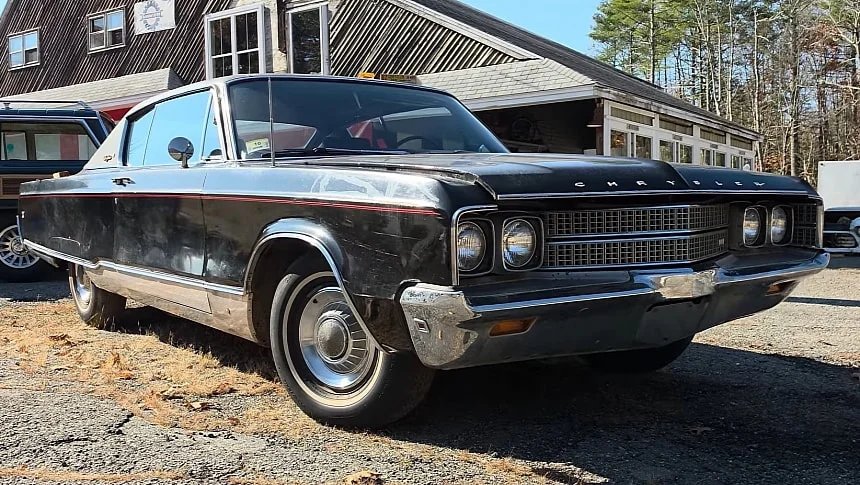
The New Yorker, one of Chrysler's most iconic and longest-running nameplates, was produced for three generations on the C-body platform. The two-door coupe you see here rolled off the assembly line in 1968, right before the New Yorker adopted the "fuselage" styling.
Although I'm a big fan of the latter, the 1968 New Yorker has its own thing going thanks to a few updates introduced that year, including the revised front sheet metal and bumpers. But more importantly, this New Yorker is one of those unrestored survivors we don't see very often.
The Mopar was discovered by classic car enthusiast Steve Magnante at an automotive shop in Hubbardston, Massachusetts. It has been sitting for about ten years, but it hasn't been neglected. And even though it's nearly 60 years old as of 2026, it's still in very good shape. This includes the original paint, the vinyl top, and the interior. Oh, it's also a legit triple-black classic.
The good news extends under the hood, which contains the numbers-matching 440-cubic-inch (7.2-liter) V8. The RB was the only unit available in 1968, with two flavors available. The standard K-code unit came with 350 horsepower on tap, while the optional L-code "TNT" variant delivered 375 horsepower. This New Yorker packs the former.
Nouvelles connexes
