'Godfather Of The Corvette' Drove This 1974 Stingray, And It's Getting Restored
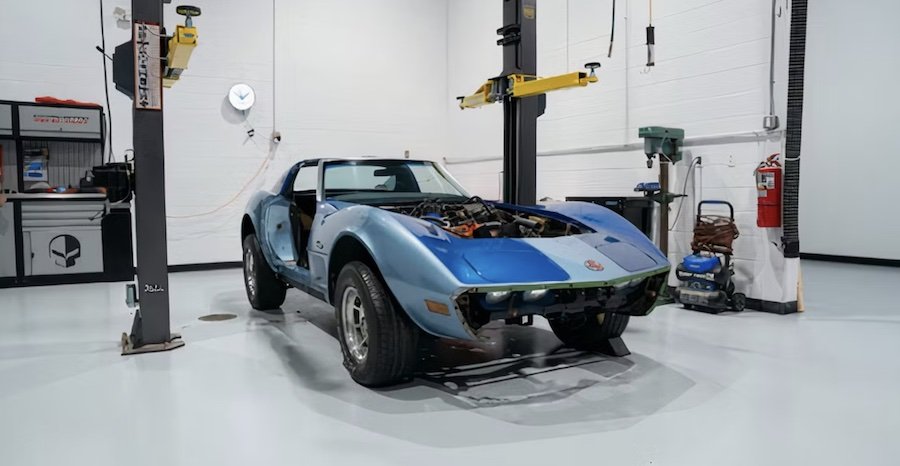
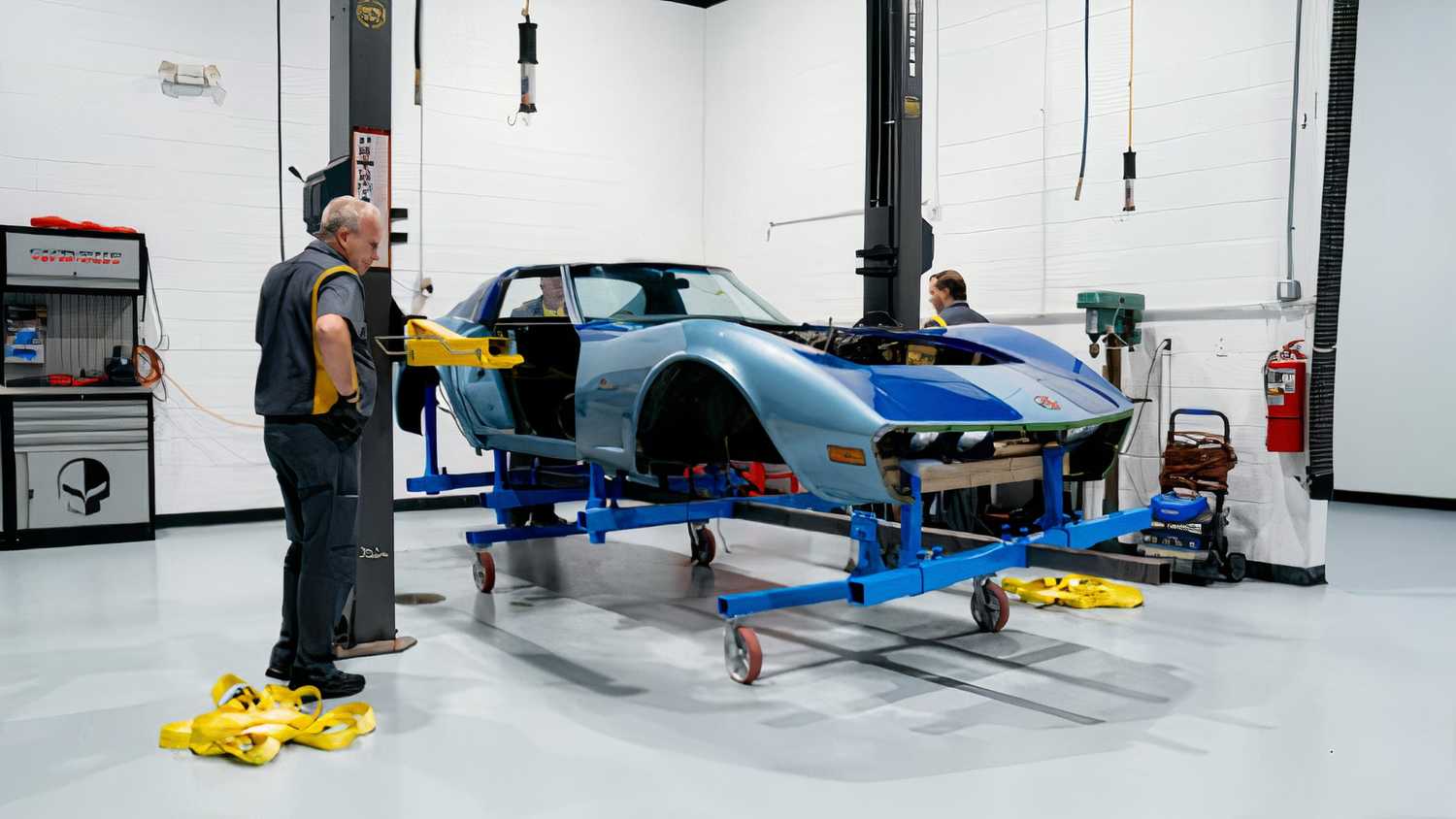
According to Chevrolet, details like the creased leather armrest on the driver’s side, worn by Arkus-Duntov's elbow through years of use, are still in the car. The 1974 model was presented to Arkus-Duntov by Chevrolet as a retirement gift, and, according to Chevrolet, it's the only Corvette Arkus-Duntov owned despite being the architect of the Corvette's success as a performance car.
A Display Centerpiece
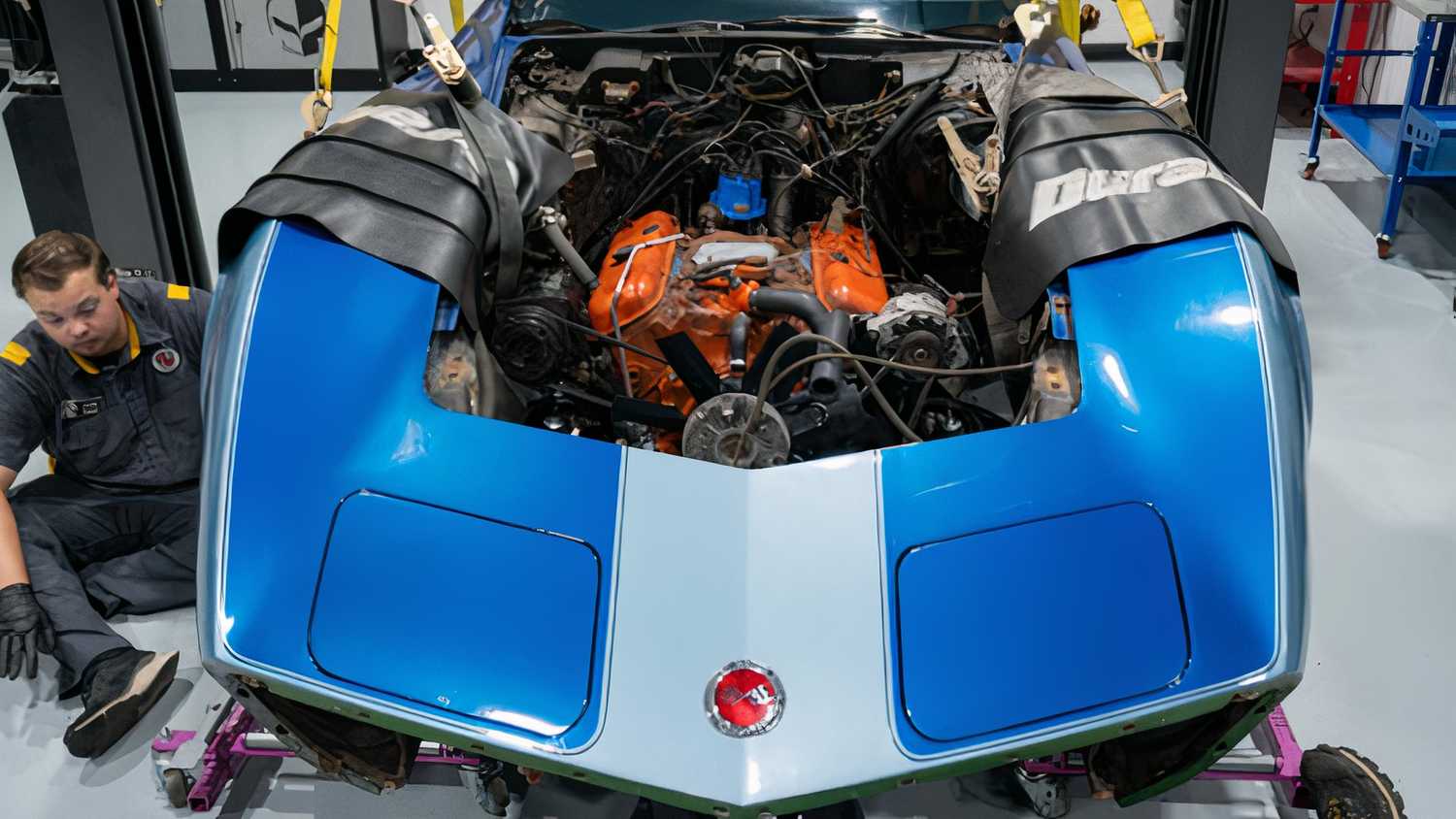
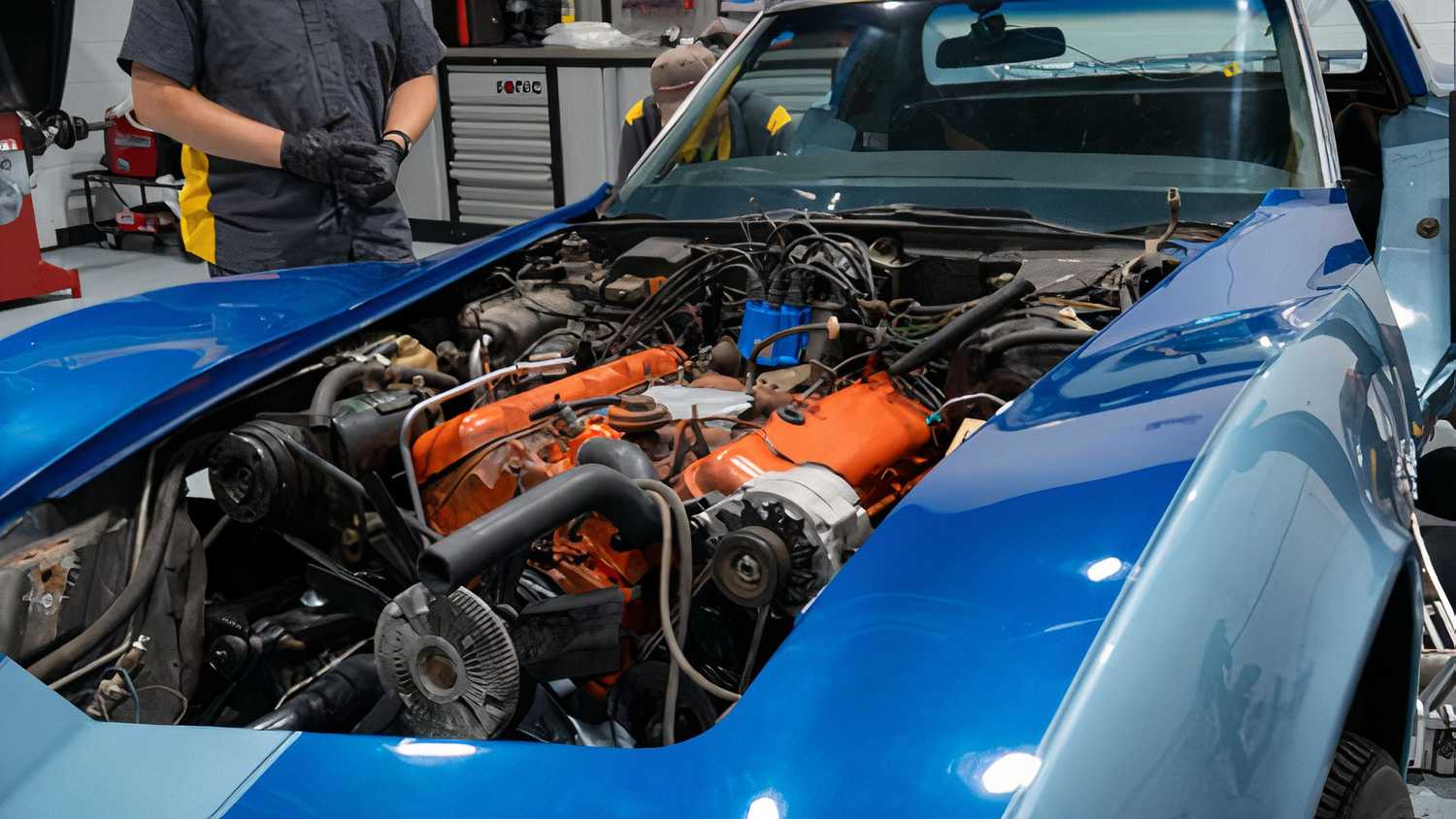
Arkus-Duntov's Corvette has a 454 big block engine, air conditioning, power steering and brakes, and aluminum wheels. Interestingly, Chevrolet presented him with an automatic transmission model, despite Arkus-Duntov being a racer and driving enthusiast as much as an engineer. He even garnered class wins at Le Mans in the 1950s.
When Arkus-Duntov owned the Corvette, it went from its original silver color to green. Later on, it got its two-tone blue livery by request from Arkus-Duntov, who had a friend paint it up. Arkus-Duntov's initials were added to the doors. It has a special “Zora Arkus-Duntov Engineering Center” decal on the rear deck of the Corvette, and it's all still there as part of this restoration. A painting of the man himself, originally presented to him by his wife Elfi, will also go on display with the car.
An Incredible Legacy
Though Arkus-Duntov is often called the "father (or godfather) of the Corvette," the car was created by the legendary designer, Harley Earl. However, it was Belgium-born Arkus-Duntov that pushed Chevrolet to start competing with Ford in terms of performance. In the 1950s, hot rod culture was growing fast, and many American soldiers had returned from Europe after World War II with a taste for sports cars. In 1957, Arkus-Duntov became Director of High Performance Vehicles at Chevrolet after he helped the push to put Chevy's small-block V8 engine into the Corvette. The V8 quickly replaced Chevy's inline-six as the base engine.
While he managed to save the Corvette from the chopping block due to its slow sales, Arkus-Duntov's timing to become Director of High Performance Vehicles was unfortunate. Following a horrific crash at Le Mans, that was the year Chevrolet joined AMA, Ford, and Chrysler in signing a gentleman's agreement to stop competing in organized motorsports. He wasn't a fan of the agreement and stealthily set about supporting independent drivers.
On top of that, Arkus-Duntov started the Grand Sport program, aiming to create a special lightweight Corvette, which included an aluminum version of the small block V8, to compete with prototype cars in international racing. General Motors caught wind of the project and ordered him to shut it down in fear of monopoly laws. Three cars were developed, all of which ended up in independent hands, and Arkus-Duntov moved onto the Chevrolet Engineering Research Vehicle, more widely known as the CERV I.
Arkus-Duntov continually pushed the Corvette to be a world-class performance car, and even pushed for a mid-engine layout long before his retirement in 1975. His passion for the Corvette never waned, though he sadly passed away in 1996 without seeing a mid-engined Corvette reach production. He is remembered for his enthusiasm and ability to inspire the people he worked with, as well as his relentless push to improve the Corvette. It's fitting that his personal car will be the focus of the National Corvette Museum’s 31st Anniversary Celebration taking place in August.
Related News
