Heirloom 1925 Nash Advanced Six Is Over 100 Years Old, Still Looks Stunning
One of America's many orphan brands, Nash disappeared mainly because it could compete with Ford, GM, and Chrysler as an independent automaker. But despite its short-lived life and nearly forgotten heritage, Nash Motors has quite a few innovations to brag about.
The company introduced the first automobile with a heating and ventilation system in 1938. Only three years later, it developed the first production car with unibody construction. In 1950, it introduced seat belts and built America's first compact car, the Rambler.
Nash also left a few notable automobiles behind. The Rambler is obviously one of them. Introduced in 1950, it pioneered the compact segment but was laid to rest in 1955. The nameplate was revived under AMC ownership and remained in production through 1969.
The Ambassador is also a well-known classic. Built from 1927 to 1957, it was nicknamed "the Kenosha Duesenberg" due to its premium features and outstanding construction.
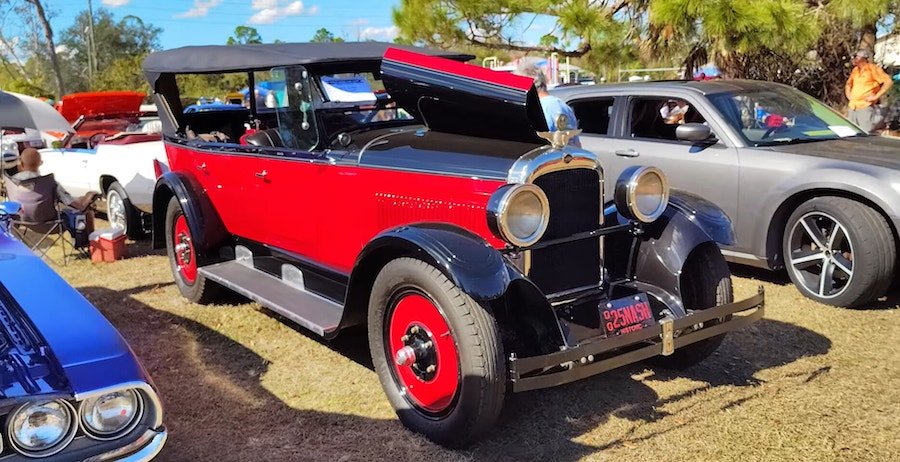
The 1925-model-year Nash you see here is far from famous, but it is one of only a few that have survived in fabulous condition. It was spotted at a local car show in Florida, and the story goes that the vehicle is an heirloom gem preserved by the same family for decades.
It's an Advanced Six model, one of three nameplates offered by Nash at the time. The other ones were the more affordable Special Six and the entry-level Ajax. The Advanced Six lineup included eight different models numbered from 161 to 1969.
This vehicle is a 161 version, which means it has a Touring body style and seats five passengers. It was the most affordable Advanced Six model, priced from $1,375 (about $25,750 in 2026 dollars). It's one of only 10 Advanced Six cars registered in the Nash Car Club. It's also one of only two model 161s.
There's no info as how original this Nash is, but it looks authentic both inside and out. It's also in fantastic condition for a vehicle that recently turned 100. The engine looks just as good as the rest of the car, and I'm fairly sure it is the factory unit.
These cars were equipped with a 249-cubic-inch (4.1-liter) overhead-valve inline-six engine rated at 60 horsepower. A three-speed manual transmission routed the oomph to the rear wheels. The Advanced Six series was known for its luxurious features and innovative engineering back in the day. It was also regarded as a powerful automobile.
Due to their scarcity, these cars rarely pop up at public auctions. However, the very few that crossed the block in recent years show that the Advanced Six is not a very valuable classic. They rarely fetch over $20,000. But this also means they're among the most affordable classics from the era.


Related News
