6 photos
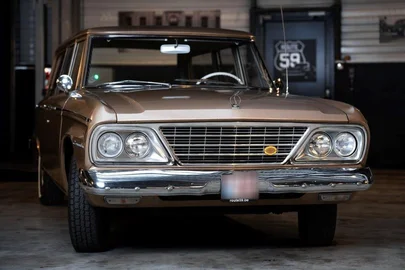
1963' Studebaker Wagonaire
Report This Ad!Rate This!Bookmark This
€25,000Published 22 November 2026ID: ix6hzm
- Route59
- Belgium
- +32Show phone
Information from the owner
Age: 63 years
Mileage: 43197 km
Displacement: 4247 cc
Fuel: Petrol
Transmission: Manual
Exterior color: Bronze
Interior: Air Conditioning
Seller's comments about 1963' Studebaker Wagonaire
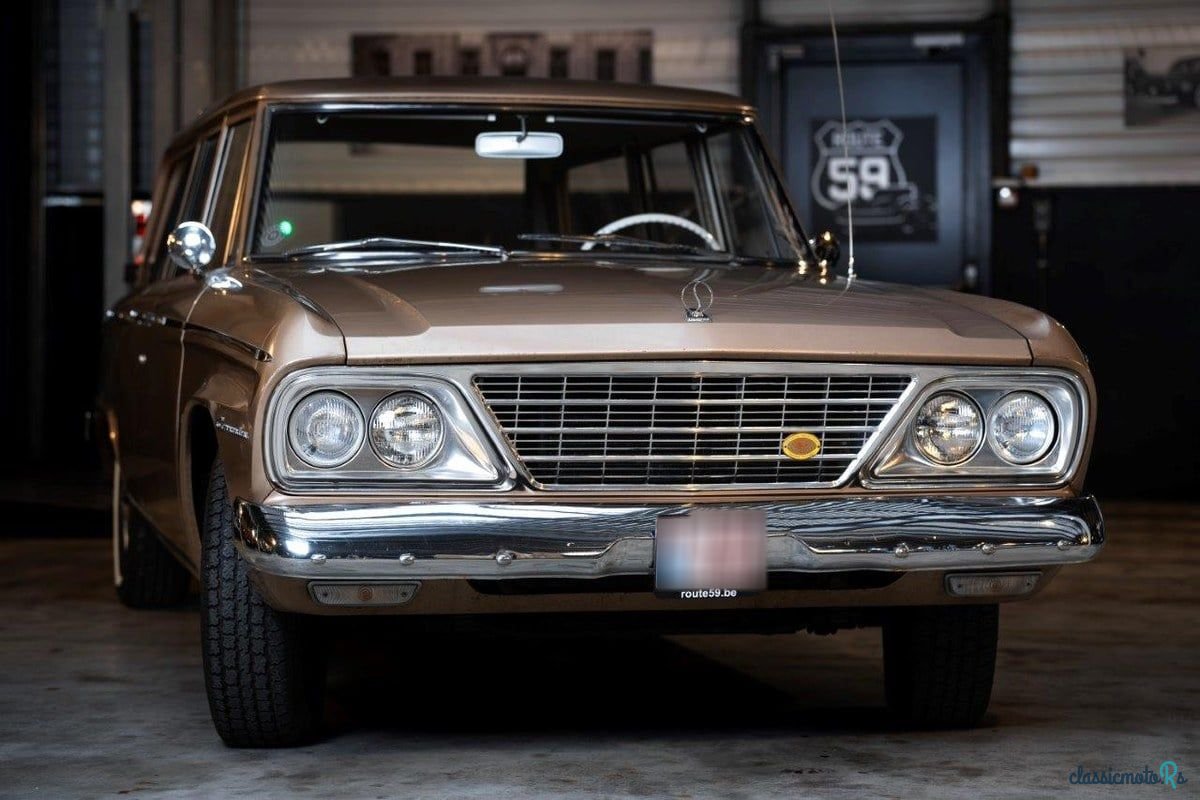
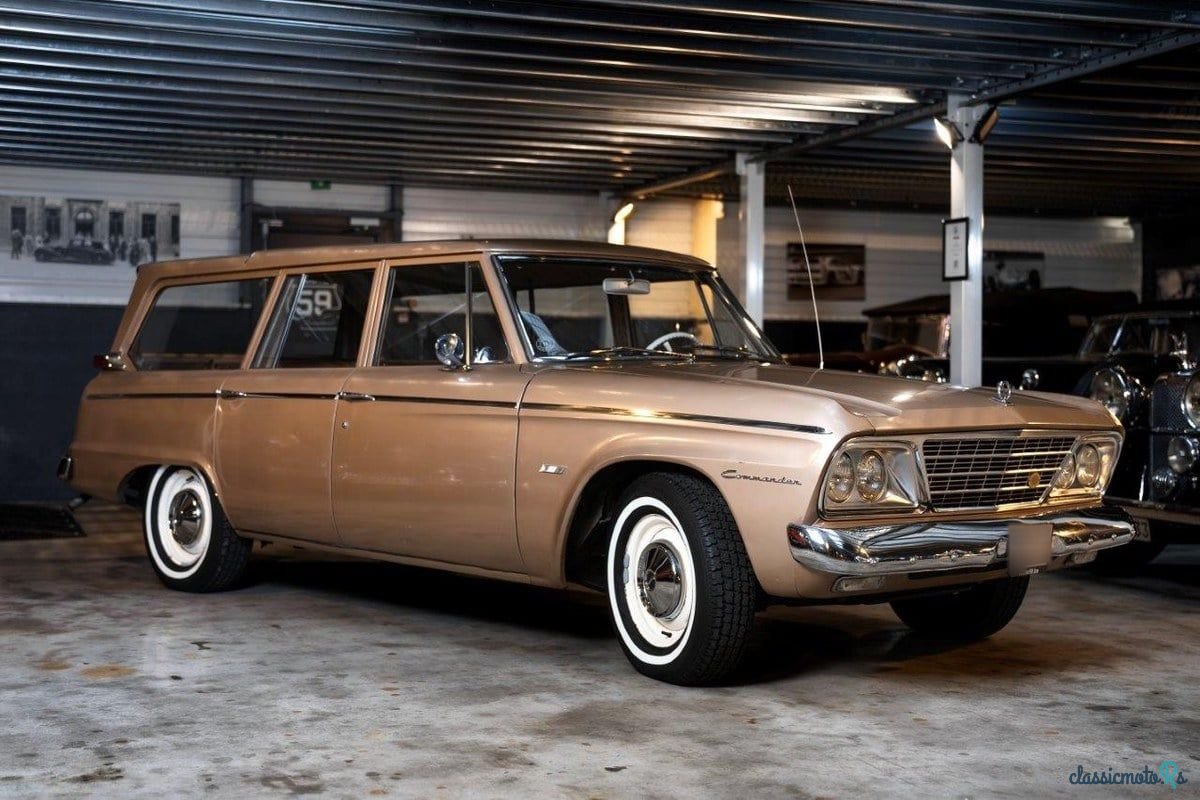
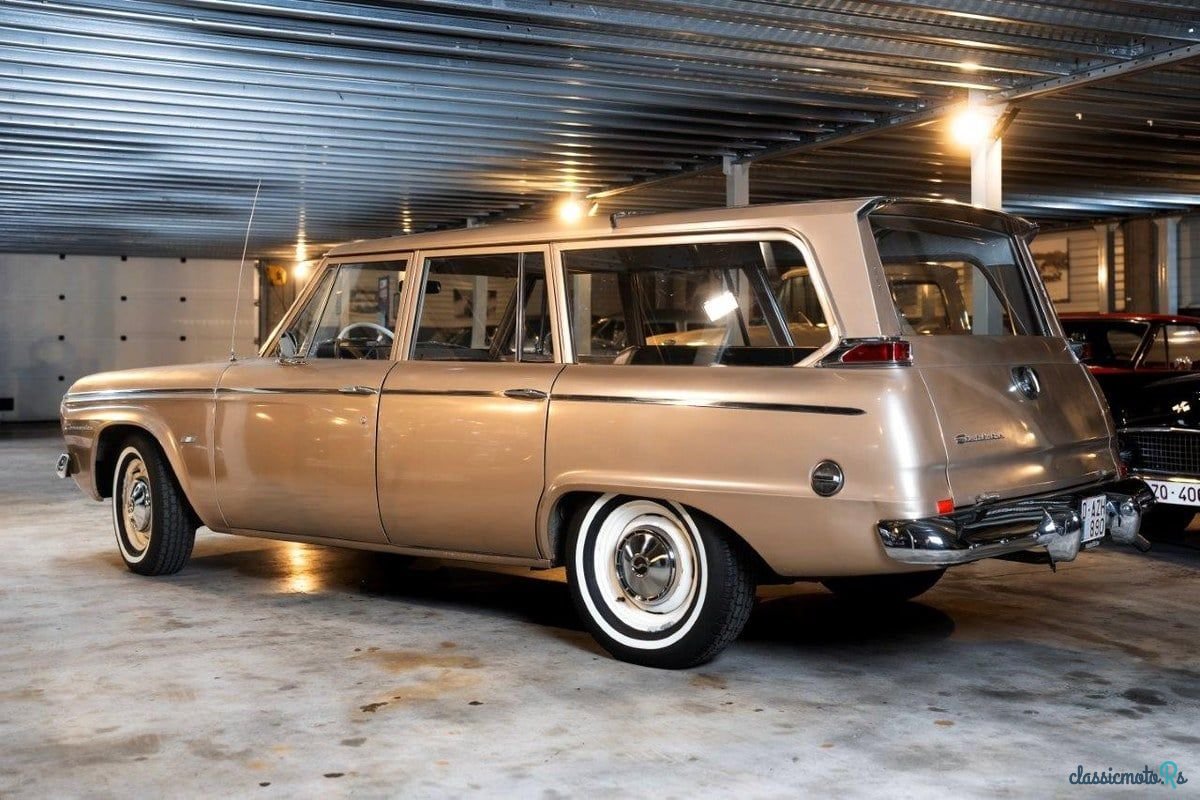
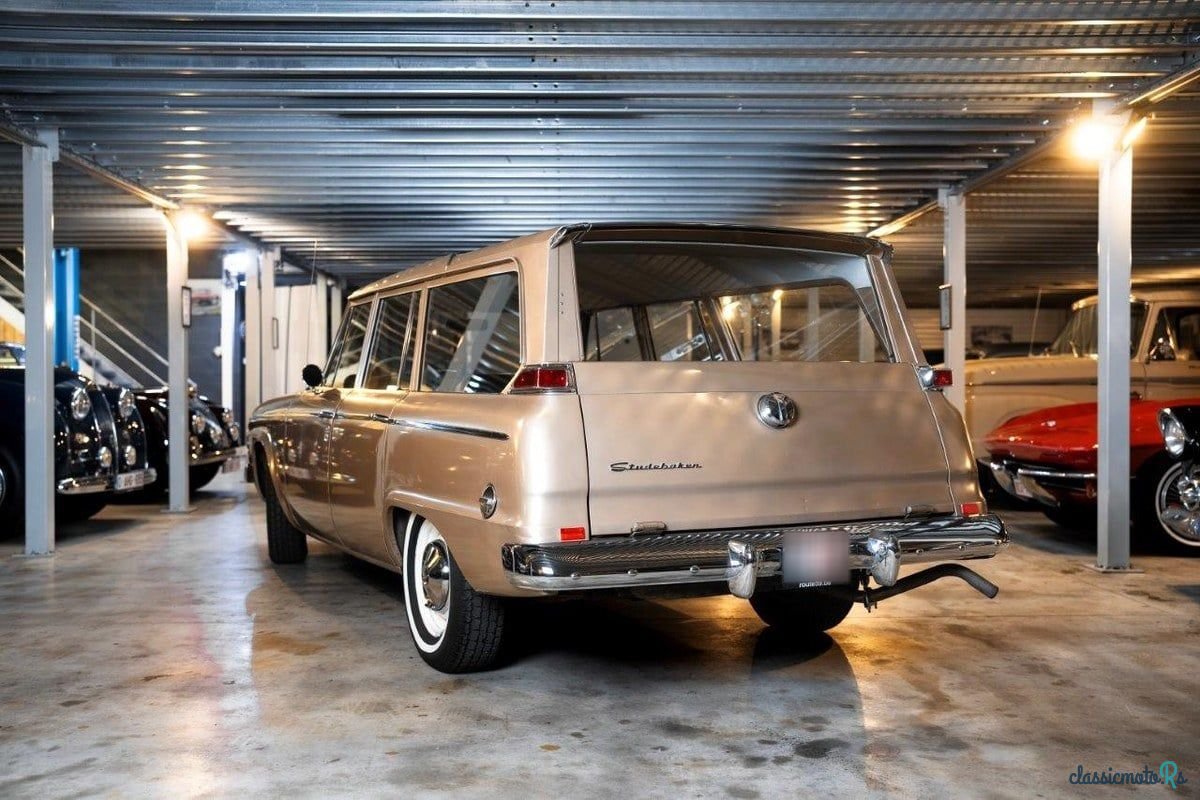
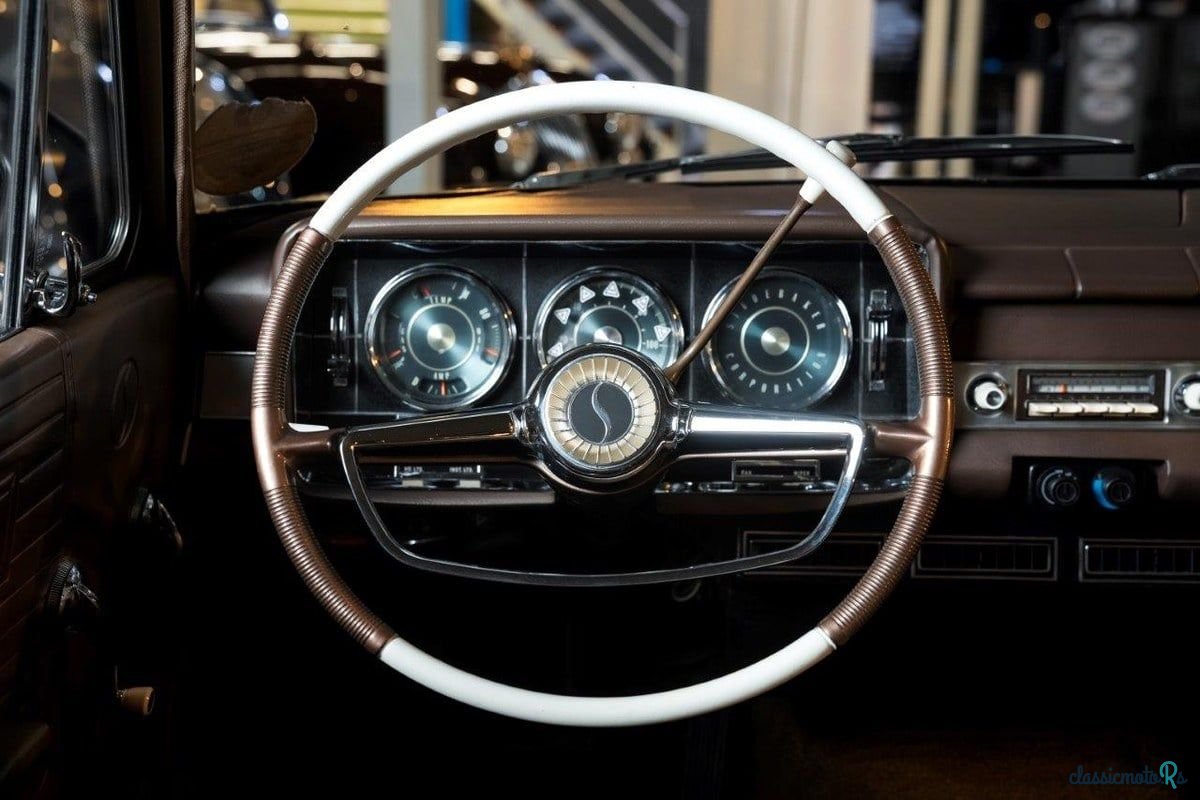
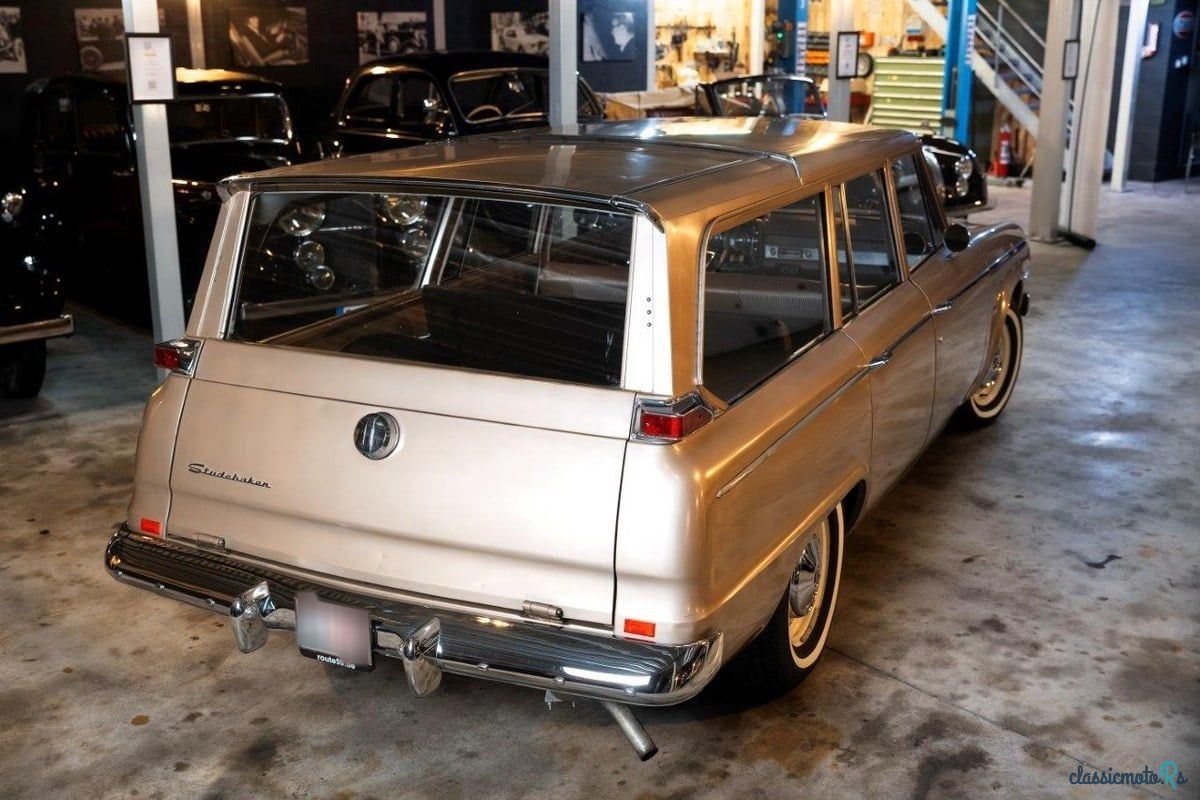
Among the American estates of the early 1960s, the Studebaker Commander Wagonaire occupies a special place. Designed under the direction of stylist Brooks Stevens, the Wagonaire stood out for a particularly innovative idea: part of the rear roof could slide forward to allow bulky items to be carried upright.This example is even more unusual, as it is the rare "Solid Roof" variant, fitted with a fixed roof. Studebaker offered this configuration as an alternative to the famous sliding roof, particularly after the sealing problems encountered on the early cars.Carrying chassis number 64V11506 and body number 923, this car is a 1964 model year Commander Wagonaire V8, built at the Studebaker plant in South Bend, Indiana, in 1963. Its serial number suggests it was probably built in autumn 1963, just a few weeks before car production ceased permanently at South Bend in December of that same year.Under the bonnet sits the robust Studebaker 259 cu in V8, equal to 4, 247 cc, fed by a two-barrel carburettor. It produced around 180 bhp SAE and a generous torque of approximately 353 Nm. The transmission is one of the most interesting features of this car: unlike many American estates fitted with an automatic, it has a three-speed manual gearbox operated from the steering column, complemented by an overdrive that noticeably reduces engine speed on the open road.The layout remains typically American: front-mounted longitudinal engine, rear-wheel drive, independent front suspension, live rear axle on leaf springs and drum brakes. At roughly 4. 90 m long, 1. 82 m wide and with a 2. 87 m wheelbase, the Wagonaire is relatively compact by the standards of its era. Its kerb weight is approximately 1, 650 kg.The cabin seats six, arranged across two wide benches. The fold-down rear seat turns the Wagonaire into a true load carrier, in keeping with the highly versatile philosophy Studebaker envisaged. Air conditioning has been fitted to this example at a later date.Still, the main appeal of this car lies perhaps in its exceptional state of preservation. It is presented as largely unrestored, retaining a very large part of its original substance, and in its Golden Sand Metallic paint, also listed in the Wagonaire Registry.Its history is particularly well documented. The car retains its 1963 sales contract, its original owner's manual still bearing handwritten notes from its first owner in Iowa, as well as a substantial file of invoices and documents tracing its life.According to the history accompanying the car, it has had only six owners. Its third owner was reportedly a curator at the Henry Ford Museum in Dearborn, while one of its German owners was a well-known motoring journalist. This succession of owners, evidently attentive to its historical interest, probably goes some way to explaining its remarkable level of preservation today.With its 259 cu in V8, its rare manual gearbox with overdrive, its fixed roof, its Golden Sand Metallic colour and its very complete history, this Studebaker Commander Wagonaire is a very authentic testament to the final years of Studebaker production at South Bend.An American car that is at once original, practical and mechanically simple, whose individual story is now almost as interesting as that of the model itself.