BMW Z3 M Coupé buying guide, history, problems and what to pay
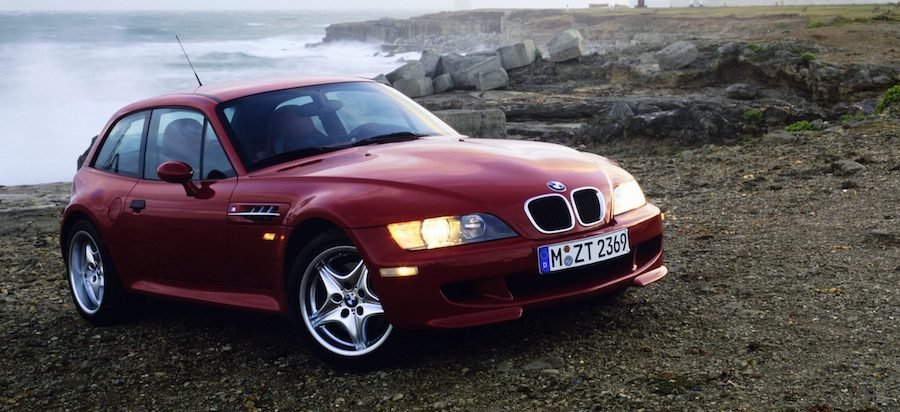
Two decades on, its rarity, its M3 engines and its sheer oddness have made it one of the most sought-after modern classics from BMW’s M division, and values climbed sharply in 2020 before easing this year.
The recipe is simple enough: a stiffened Z3 M Roadster with a fixed roof and a hatchback, powered by the same 3.2-litre straight-six from the M3 and driving the rear wheels through a five-speed manual gearbox and limited-slip differential. Early cars used the E36 M3’s S50 engine; from 2001, the E46 M3’s S54 took its place, and just 165 of those later cars were built with right-hand drive.
BMW Z3 M Coupé at a glance
| Built | 1998-2002; UK sales from 1998 |
| Body styles | Two-seat coupé |
| Engines | 3.2-litre straight-six: S50 316bhp (Europe, 1998-2000), S52 240bhp (US, 1998-2000), S54 321bhp in Europe and 315bhp in the US (2001-2002) |
| Drive | Rear-wheel drive, limited-slip differential |
| Gearboxes | Five-speed ZF manual only |
| Most collectable | A right-hand-drive S54, one of 165 |
| Best value | A well-documented right-hand-drive S50 |
| Key checks | Boot floor and differential mount, hidden sill and jacking-point corrosion, Vanos, S54 bearing shells, cooling system, suspension bushes |
| Values (2026) | S50 £15,000-40,000; S54 £35,000-60,000-plus |
History of the BMW Z3 M Coupé
The M Coupé owed its existence to Burkhard Göschel, the engineer in charge of the Z3 programme, who wanted a stiffer body than the roadster could offer so that BMW’s M division could tune the chassis properly. A fixed roof was the obvious answer, and his small team built a prototype before seeking official approval. BMW’s board was unconvinced at first, and only gave the go-ahead on condition that the car shared as much as possible with the M Roadster; everything from the windscreen forward, including the doors, is common to both.
The production car was revealed at the Frankfurt motor show in September 1997, and went on sale in 1998 at a UK list price of £40,595. Like the rest of the Z3 range, it was built at BMW’s plant in Spartanburg, South Carolina, making it the first M car to be assembled outside Germany, although the engines and gearboxes were built in Germany and shipped across the Atlantic.
European cars were powered by the 316bhp double-Vanos S50 B32 from the E36 M3 Evolution, good for a claimed 0-62mph time of 5.2sec and an electronically limited 155mph. Emissions rules meant North American cars made do with the 240bhp S52. European cars had no traction or stability control, leaving the limited-slip differential and the driver to manage the rear wheels; North American cars had ASC+T traction control.
The suspension combined E36-derived MacPherson struts at the front with E30-style semi-trailing arms at the rear, strengthened for the M car along with the rear subframe. Contemporary testers admired the engine and the steering, which was quicker and more direct than the M3’s, but found the chassis nervous on damp or broken roads, and the rear suspension rewarded a careful right foot.
In 2001, the M Coupé received the S54 engine from the E46 M3. Peak power rose only slightly, to 321bhp in Europe, but the S54 delivered its torque lower in the rev range and brought a drive-by-wire throttle, while the claimed 0-62mph time fell to 5.1sec. Dynamic Stability Control and tyre-pressure monitoring became standard on every car at the same time, along with grey-faced dials, extra chrome trim and new colours, but the body and chassis were otherwise unchanged.
It was a short-lived addition. Production ended in 2002, by which time 6291 M Coupés had been built, compared with more than 15,000 M Roadsters. Just 1112 had the S54 engine, and right-hand-drive production amounted to 821 S50s and 165 S54s.
Which BMW Z3 M Coupé should you buy?
The European S50 is the rawer of the two, with no electronic safety net and a more demanding character on the limit. The S54 is the more refined and usable car, with punchier mid-range performance and DSC to catch mistakes, and its rarity means it commands a considerable premium.
For most buyers, a well-documented right-hand-drive S50 offers the best balance of character and cost, and UK-supplied cars carry a small premium over left-hand-drive imports. Whichever you choose, the structure comes first: check the boot floor around the differential mount and look for hidden corrosion in the sills and jacking points, as both can be costly. After that, the priorities are the Vanos and evidence of valve adjustment on an S50, preventative bearing-shell and Vanos work on an S54, then the cooling system and suspension bushes.
Mileage matters less than you might think. A 100,000-mile car with a reinforced boot floor, a rebuilt Vanos, a refreshed cooling system and suspension, and a thick file of specialist invoices is likely to be a safer buy than a 30,000-mile collector’s car still on its original bushes, water pump and engine internals. Given the money involved, a pre-purchase inspection by a BMW M specialist, including a paint-depth check, is money well spent.
BMW Z3 M Coupé common problems and checkpoints
Boot floor and differential mount
- This is the most important check on any M Coupé. The differential hangs from a single-ear mount on a crossmember spot-welded to the boot floor, and torque reaction can gradually pull those spot welds apart. Once the crossmember starts to move, cracks can spread around the differential mount itself. It is often described as subframe failure, but the subframe is rarely the problem.
- Lift the boot carpet. The factory spot welds should be neat, flat circular dimples; any that have pulled downwards, split, grown rust halos or disappeared under cracked seam sealer are warning signs. Then look underneath at the corners of the differential bracket and check that the crossmember hasn’t separated from the floor. Visible failed welds may be the first sign of much more movement underneath.
A professionally reinforced floor, ideally with photographs taken during the work, is a positive rather than a reason to walk away. Check the differential mounting bush too, as excessive movement increases the shock loads going into the floor. - The S54 cars received no relevant chassis changes, so they are just as vulnerable.
Engine: S50 and S52
- A growl or grumble from the Vanos as the revs drop through roughly 1200-1500rpm is very common and doesn’t necessarily mean the unit is failing. More telling are an engine that feels flat and short of torque, a diagnostic Vanos test showing that the camshafts are not reaching their target positions, and oil leaks.
- The bolts securing the S50’s Vanos solenoid cover can loosen or shear, allowing a lot of oil to escape very quickly, so treat any oil around the Vanos unit as urgent. Other recurring faults include worn piston seals and snapped pistons within the unit. Evidence of a professional rebuild is a bonus.
- A persistent tick from the cylinder head at idle or low revs usually means the valve clearances need adjusting. The job is labour-intensive and sometimes skipped, so look for invoices rather than stamps.
- Valve cover gaskets harden with age, and the constant-pressure valve in the side of the block can leak oil towards the back of the engine, where it is often mistaken for a rear crankshaft seal leak. It is an inexpensive part.
- On the S50, a stretched throttle cable can make the throttle response feel vague, but it is easy to replace.
Engine: S54
- The S54’s Vanos has its own weaknesses: cracked solder joints in the solenoid pack, sticking solenoid valves, loose camshaft sprocket bolts and broken tabs on the exhaust camshaft hub that drives the Vanos oil pump. A broken tab doesn’t necessarily make an obvious noise, so look for documentation of a preventative overhaul with updated sprocket bolts and an inspected or upgraded hub and pump disc.
- Connecting-rod bearing wear is a recognised S54 concern, and BMW’s revised bearing clearance specification covers the Z3 M as well as the E46 M3. However, the M Coupé was not included in BMW’s E46 M3 bearing-shell campaign, because its lower maximum engine speed meant BMW did not consider it susceptible. Many careful owners have replaced the shells anyway, so proof of preventative replacement is a major bonus. On an otherwise excellent car with original shells, budget to have them inspected or replaced rather than walking away.
Cooling system
- The water pump is a wear item on both engines, and a noisy bearing is an early symptom. At this age, look for evidence that the pump, thermostat, radiator and hoses have been renewed, rather than a mileage interval.
- Check the radiator and plastic components for staining, run the car until it is fully hot, make sure the viscous and electric fans work properly, and ask about any history of overheating. A well-maintained standard system or a properly documented conversion is preferable to a collection of anonymous aftermarket parts.
- Both engines should be warmed up properly before using high revs: wait for the oil to reach temperature, not just the coolant.
Transmission and differential
- Every M Coupé uses a ZF Type C five-speed gearbox with a 25 per cent limited-slip differential. With the car stone cold, move the gearlever across towards the fifth-gear plane and let go: it should spring cleanly back to the centre. Repeat once the car is warm. A lever that stays put usually points to worn shift detent pins or bushes; the parts are not expensive, but the gearbox has to come out, so owners often combine the job with a new clutch.
- Difficulty selecting first or reverse when hot can be caused by the original clutch hydraulic hose expanding in the heat of the engine bay. A braided replacement hose is a well-established fix.
- Check for clutch slip, dual-mass flywheel vibration and clonks from the driveline. A fairly low clutch biting point on its own is characteristic of these cars rather than a sign of wear.
Suspension and brakes
- After more than 25 years, the condition of the bushes matters more than the mileage. Worn rear beam and trailing-arm bushes let the rear end move around, giving a loose, tail-wagging feel and adding to the loads on the differential mount. Renewed or sensibly specified polyurethane rear beam bushes are a worthwhile upgrade.
- At the front, check the control-arm bushes, ball joints and track rods. The car should stay straight under hard braking; wandering or movement at the steering wheel suggests worn bushes rather than a simple alignment problem.
- A sharp clunk from either side of the boot over bumps is the classic symptom of failed rear damper top mounts. The parts are cheap, but much of the boot trim has to come out to reach them, so upgraded mounts that can later be serviced from underneath are popular.
- Some wear on the inner edges of the tyres is normal, particularly at the rear. Markedly different wear from one side to the other is not: because the rear geometry is largely fixed by the semi-trailing arms, it can point to tired bushes, sagging springs or even a bent arm. This is especially relevant on cars that have been lowered or used on track, and many have aftermarket springs and dampers, so make sure the car sits level and tracks straight.
- European cars use the E36 M3’s large vented brakes with two-piece floating front discs. Calipers can seize on cars that have stood for long periods, so make sure the car brakes straight and that no wheel is noticeably hotter than the others after a drive. Check the front discs carefully, as they are expensive.
Bodywork
- Older guides often claim the M Coupé barely rusts, but that is no longer true. The bolt-on outer sill covers trap moisture at their ends, as do the areas behind the plastic jacking-point inserts, and corrosion can spread to the front wings and the structure around the jacking points. An outer sill cover can look sound until it is removed and falls apart
- Inspect the lower front wings, sills, sill ends and jacking points closely. Ideally, there should be photographs showing that the sill covers have been removed and the inner sills inspected, treated and cavity-waxed. Rust on a replaceable outer cover is not a disaster; rotten structure behind it is.
- Plenty of S50s have been written off and repaired, so check for a Cat D or similar history. Look for poor panel gaps and overspray, check that the large clamshell bonnet is aligned properly, and consider a paint-depth inspection rather than relying on a clean history. Paint can chafe where the bonnet meets the front bumper, but heavier corrosion there may indicate a repair
- The rear screen can develop milky delamination around its edges, and the rear wiper wiring can break where it flexes with the tailgate.
Interior and electrics
- Seats that rock backwards and forwards under acceleration and braking have deteriorated rubber bushes in their electric mechanism. It is a cheap fix, but extremely common.
- Other familiar faults include a sagging glovebox, a failed headlight or dimmer switch, slow electric windows (often cured by lubricating the mechanism), a stiff or detached heater temperature cable and a blower that only works on its higher settings, which usually means a failed resistor pack. Foam surrounds on the Harman Kardon speakers also perish.
- On an S54, make sure the DSC and ABS warning lights come on during the ignition check and then go out.
Worn bolsters are common on high-mileage cars.
BMW Z3 M Coupé values: what to pay
Values have eased over the past year, after a spike in 2025 when the best S50 cars were selling for close to £40,000 on Collecting Cars. Most of this year’s UK auction results for S50 cars have landed between £20,000 and £26,000, with a 107,000-mile 1998 car selling for £20,200 in June. Exceptional low-mileage cars with a full history can still make £30,000-40,000. That broadly matches the Hagerty Price Guide, which values an M Coupé at £18,600 in fair condition, £25,700 in good condition and £35,700 in excellent condition, rising to £63,000 for a concours example, although it doesn’t distinguish between the two engines.
The S54 is a separate market, and UK-supplied right-hand-drive cars command a substantial premium. A 2001 example sold for £40,468 on PistonHeads in May, and a 45,000-mile 2002 car made £60,750 at Iconic Auctioneers’ NEC sale in 2023. On either version, a comprehensive maintenance record and a sound body structure are worth more than a superficially attractive price, as neglected engine work, accident damage, hidden sill corrosion or a cracked boot floor can quickly absorb an apparent saving.
| Fair | Good | Excellent | |
|---|---|---|---|
| S50 M Coupé (UK) | £17,500 | £24,000 | £35,000 |
| S54 M Coupé (UK) | £35,000 | £45,000 | £60,000 |
Notícias Relacionadas
