1973 Imperial LeBaron Parked for 40 Years Emerges With Rare Feature
It's been over 40 years since Chrysler retired the Imperial brand, and its cars aren't as desirable as other Mopar classics. But some are definitely cool, particularly the "Forward Look" rigs produced during the second half of the 1950s.
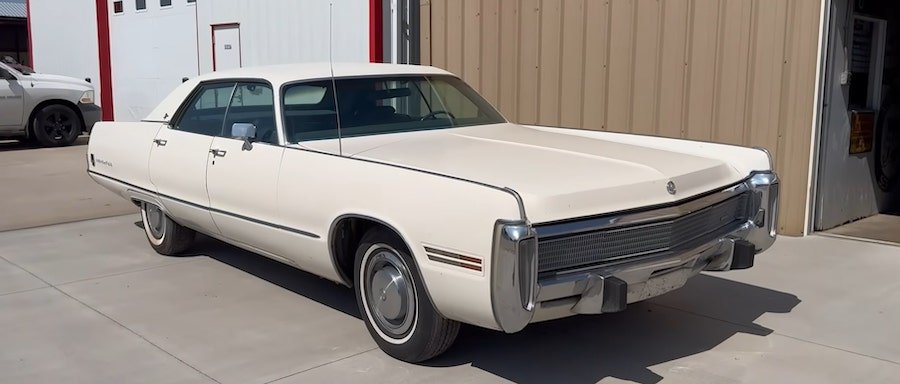
I'm also a fan of the "Fuselage Look" Imperials. Chrysler introduced this design language in the late 1960s, and I think it works great with full-size cars. Add hidden headlamps, a massive grille, and heavy chrome into the mix, and the result is an imposing yet elegant land yacht. The 1973 LeBaron you see here is one of those rigs.
1973 was the final year for the fourth-generation Imperial. It's also the last to feature the full-width front grille. In 1974, the redesigned Imperial arrived with a tall central grille similar to Rolls-Royce.
The 1973 Imperial also featured new rubber over-riders front and rear (due to new federal standards), which added nearly six inches (152 mm) to the car's length. At 235.3 inches (5,977 mm) long, the 1973 LeBaron was America's longest (non-limousine) production car.
Records show that Imperial sold 16,729 LeBarons in 1973. Only 2,563 were two-door hardtops, with the remaining 14,166 examples ordered as four-door sedans. This white LeBaron flaunts the more common body style (too many doors?), but it's not as mundane as the production number suggests. That's because it sports a factory sunroof.
Although a rather common feature nowadays, the sunroof was still relatively new in the early 1970s. Chrysler introduced the option on the Dodge Charger in 1969. Even though it expanded to other nameplates starting in 1970, the sunroof remained a scarcely ordered option through the mid-1970s.
According to the Mopar Sunroof Registry, about 13,100 units got a sunroof from 1969 to 1974. That number includes vehicles from all four brands, including Chrysler, Imperial, Dodge, and Plymouth. That's a tiny number.
So, exactly how many 1973 Imperials were ordered with sunroofs? Well, the registry is missing this information. We do know that Imperial sold 221 sunroof cars in 1972 and that sales increased across the board for 1973. For instance, deliveries of sunroof-equipped Dodge Chargers jumped from 488 to 3,097 examples.
My best guess is that fewer than 1,500 Imperials got a sunroof in 1973. However, far fewer are still around. The Mopar Sunroof Registry lists only 10 examples, including a pair of two-door hardtops and eight four-door sedans. The white example shown here isn't in the registry, but it's unclear when it was last updated.
Numbers aside, this LeBaron is a rare sight. And the fact that it's an unrestored survivor that spent a whopping 40 years in storage makes it that much more impressive.
Documented by YouTube's "Nobody's Show," this Imperial was reportedly parked sometime in the mid-1980s. The LeBaron emerged from storage in late 2024 and is in fantastic shape overall.
Sure, the white paint is weathered and the blue interior could use thorough detailing, but this LeBaron could still roam the streets without a restoration. It will need a makeover under the hood due to damaged wiring, but the big-block V8 engine is all-original and numbers-matching. Oh, did I mention this LeBaron still has the original sunroof crank handle? Now that's a truly rare item.
The 440-cubic-inch (7.2-liter) Wedge V8 was the only powerplant available that year. The unit delivered 215 horsepower and 345 pound-feet (468 Nm) of torque following Chrysler's move to net figures. The three-speed TorqueFlite automatic was the only gearbox offered.
Often overshadowed by muscle cars of the golden era, these early 1970s Imperials are becoming increasingly harder to find. Sure, they're not exactly desirable, but there won't be many left unless we start saving them. This 1973 sedan could become one of the greatest running survivors out there.


Notícias Relacionadas
